
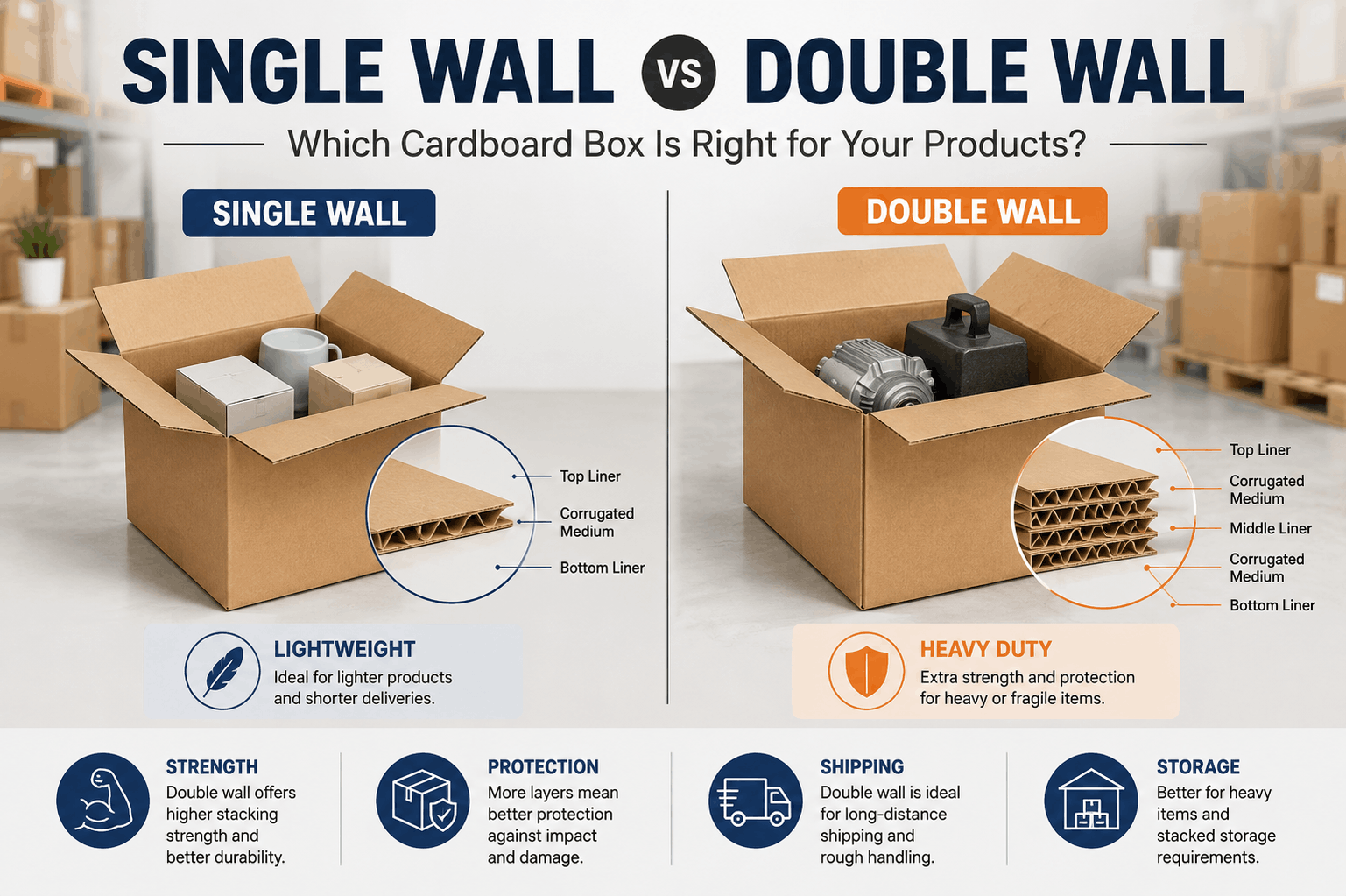
Picking the wrong box usually leads to one of two things: you either overpay for heavy-duty packaging you don’t actually need, or you try to save money and end up with a collapsed box and broken items. The real difference between single and double-walled cardboard packaging boxes comes down to layers and strength. A single wall box uses one wavy layer of cardboard sandwiched between two flat outer sheets. It is light, flexible, and perfect for everyday shipping. A double-wall box doubles up on that wavy layer, giving you two stacked rows of cushioning and three flat sheets. This extra layer gives it the heavy-duty muscle needed to handle heavy items, support long-term storage, and withstand high stacking in transit.
What Are Single and Double-Wall Boxes?
To understand how these boxes work, you have to look at what’s happening inside the cardboard itself. The secret to a box’s strength isn’t just the thickness of the paper; it’s the arches inside, which the packaging industry calls “fluting.”
Single Wall Boxes
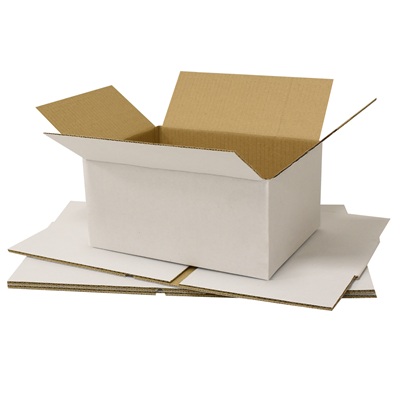
A single wall box is constructed from three sheets of paper: an outer liner, an inner liner, and a single fluted wave running through the middle. Think of those flutes as tiny columns keeping the box rigid. Different types include regular slotted cartons, in which the flaps meet at the centre, quick-assembly die-cut mailers, and flat book wraps.
Double Wall Boxes
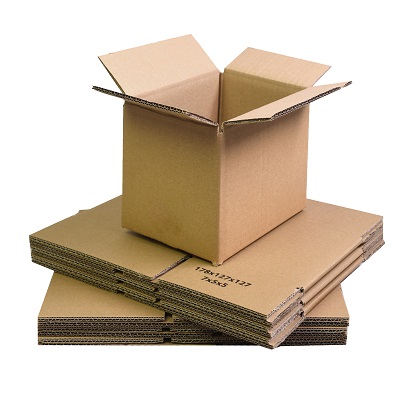
A double-wall box takes things a step further by adding a second layer of fluting and a third flat liner right in the middle. This five-layer construction makes the box significantly more rigid. Common styles include large master cartons, pallet boxes, and heavy export cases designed for sea freight.
Technical Comparison: Single Wall vs Double Wall
| Feature | Single Wall Boxes | Double Wall Boxes |
| Total Paper Layers | 3 (2 flat liners + 1 wavy flute) | 5 (3 flat liners + 2 wavy flutes) |
| Industry Strength (ECT) | Typically 32 ECT to 40 ECT | Typically 48 ECT to 51 ECT or more |
| Safe Weight Limit | Up to 10 or 15 kg maximum | Up to 30 to 45 kg safely |
| Crush Resistance | Good for normal handling | Outstanding for heavy pallets |
| Puncture Defence | Standard: can tear under sharp pressure | High; resists tears from sharp corners |
| Storage Space | Thin walls mean they store flat and tight | Thicker walls require a bit more storage room |
Where to Use Single-Wall vs Double-Wall Boxes
Choosing your box is a balancing act between safety and your shipping budget. You don’t want to over-engineer your packaging, but you also can’t afford a structural failure.
Single Wall Boxes
Lightweight E-Commerce: If you are shipping t-shirts, soft toys, shoes, or pre-packaged items that aren’t fragile, a single wall is the smartest choice to keep your postage costs low.
Office Filing and Archive: Great for holding paperwork, folders, and stationery on shelves where they won’t be stacked too high.
Low-Cost Home Moves: They are widely used as cheap storage boxes for packing bulky yet lightweight household items such as bedding, pillows, winter coats, and plastic Tupperware.
Double Wall Boxes
Heavy Domestic Moves: Essential for moving heavy, fragile items such as plates, glassware, book collections, and electronics.
High-Density Warehousing: If your boxes are going to be stacked four or five tiers high on a pallet in a warehouse for months, you need double-wall strength so the bottom boxes don’t get crushed.
Fragile or Expensive Goods: High-end audio gear, ceramics, or delicate components need that extra internal cushion that only a double-flute layer can provide.
What are the Standard Dimensions and Sizing Availability
Single-Wall Boxes
Single-wall boxes are kept relatively compact to ensure they maintain their structural integrity without buckling under lightweight to medium-sized loads.
| Box Style & Common Use | Dimensions in Inches (L x W x H) | Dimensions in Millimetres (L x W x H) | Best Suited For |
| Small Mailing Dispatch | 9×6×4 in | 228×152×101mm | Cosmetics, spare tech components, small e-commerce items. |
| Medium Slotted Shipping | 12×9×6 in | 305×229×152 mm | Hardcover books, clothing items, and packaged electronics. |
| Extended Long-Format Case | 49×5×5 in | 1000×152×152 mm | Golf club boxes, posters, umbrellas, and architectural blueprints. |
Double-Wall Box Sizes
Double-wall boxes scale up significantly in size because their five-layer, dual-flute construction handles heavy vertical stacking loads and resists crushing over long distances.
| Box Style & Common Use | Dimensions in Inches (L x W x H) | Dimensions in Millimetres (L x W x H) | Best Suited For |
| Heavy-Duty Compact Cube | 12×12×12 in | 305×305×305 mm | Heavy tools, metal fasteners, dense books, canned goods. |
| Mid-Range Cargo Carton | 18×12×12 in | 475×305×305 mm | Small kitchen appliances, computer monitors, dense retail stock. |
| Extra-Large Storage Cube | 24×24×24 in | 610×610×610 mm | Bedding, winter coats, bulky inventory, heavy-duty pallet loads. |
Conclusion
At the end of the day, picking the right cardboard box is all about matching the container to the job. Single-wall boxes offer an incredibly light, affordable, and practical solution for everyday shipping and packing light items. But when you are dealing with heavy items, delicate electronics, or a long journey on a bumpy delivery truck, upgrading to a double-wall box is worth every penny for the structural protection it provides.
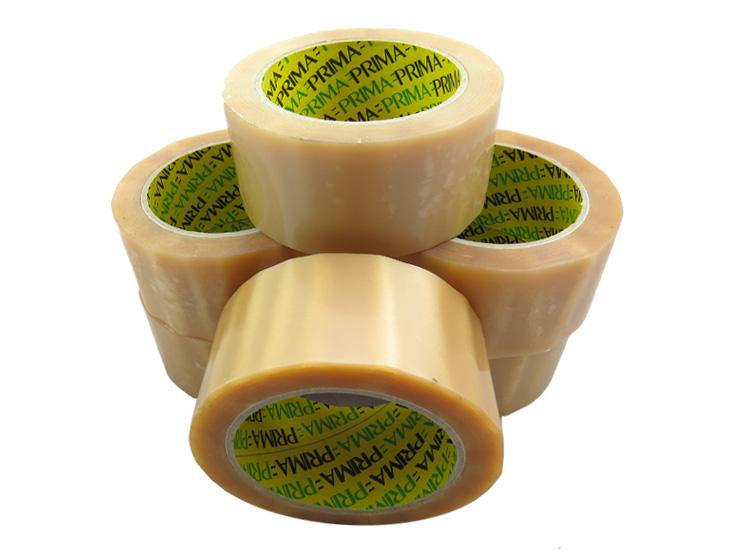
No matter which box you choose, don’t forget to seal it properly. Apply high-quality vinyl tape to all the main seams using the “H-taping” method. This locks the flaps together, reinforces the corners, and ensures your box holds its shape from the moment it leaves your hands until it arrives safely at its destination.
 Packaging Midlands
  arooba rehman
  techsofttss