
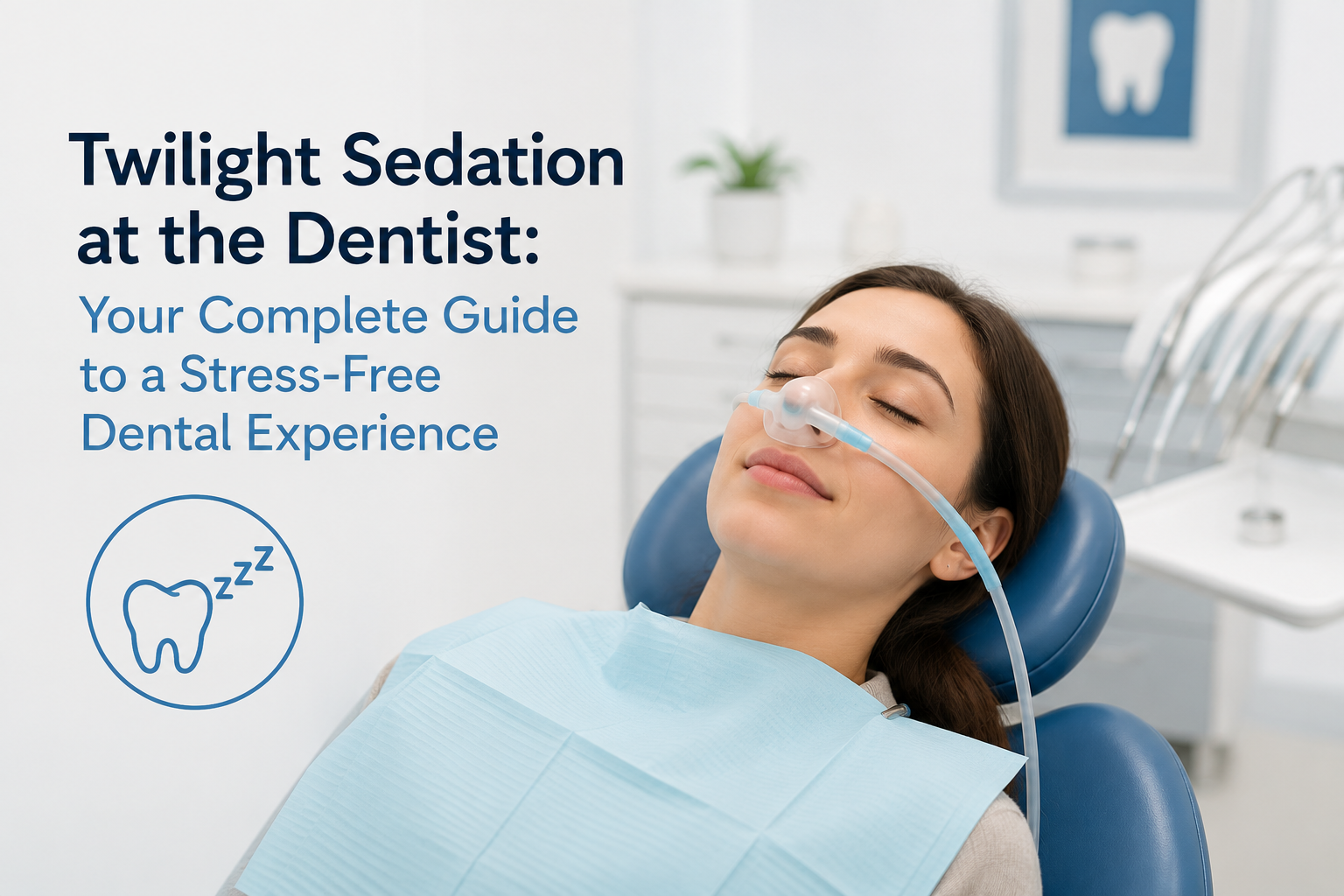
Does the thought of sitting in a dental chair fill you with dread? Millions of Australians feel the same — but a safe, gentle solution could change everything about how you experience dental care.
Dental anxiety is one of the biggest obstacles to good oral health in Australia. Research suggests that high dental fear affects approximately one in six adults, and for some groups particularly middle-aged women the figure can be as high as one in three. When fear keeps patients away from the dentist, small problems quietly become larger ones, and the cycle of avoidance becomes harder to break.
Intravenous conscious sedation commonly called twilight sedation or sleep dentistry offers a way out. It allows patients to receive the care they need in a deeply calm, comfortable state, often with little to no memory of the appointment once it’s over.
What Is Intravenous Conscious Sedation?
Intravenous (IV) conscious sedation involves delivering a carefully measured sedative medication directly into a vein, usually in the hand or arm. The result is a state of profound relaxation in which patients remain technically awake and able to respond to their dentist, but feel completely at ease — unaware of the sights, sounds, and sensations that might otherwise trigger fear.
Unlike a full general anaesthetic, you continue breathing independently throughout. Your body stays in control; it’s only the anxiety and the awareness of treatment that fades away. Most patients describe it as drifting through the appointment in what feels like minutes, waking to find it’s already done.
This approach is sometimes referred to as twilight dentistry or sedation dentistry, reflecting the dream-like, in-between state it creates.
Who Might Benefit From Sedation Dentistry?
Twilight sedation is not reserved exclusively for patients with severe dental phobia. A dentist may suggest this approach if you:
- Feel significant dread, panic, or distress at the thought of dental treatment
- Have a strong or sensitive gag reflex that disrupts procedures
- Need complex, lengthy, or multiple treatments that would otherwise require several visits
- Have had a painful or traumatic experience at the dentist in the past
- Find it physically difficult to keep your mouth open for extended periods
- Have certain special needs — including intellectual disabilities, conditions such as ADHD or Autism, or neurological differences that make a standard appointment challenging
It’s also worth noting that intravenous sedation is not appropriate for everyone. Patients who are pregnant, have specific respiratory or cardiovascular conditions, or have known allergies to sedative agents will need an alternative approach. A careful clinical assessment always takes place before any sedation is recommended.
How Does It Compare to Other Sedation Options?
Understanding where twilight sedation sits within the wider range of options helps patients make an informed choice:
Local anaesthetic only: Numbs the treatment area entirely but does nothing to address anxiety or awareness during the procedure.
Nitrous oxide (laughing gas): Inhaled through a small nose mask, it creates mild, pleasant relaxation. It wears off quickly, and many patients can drive themselves home. Best suited to mild anxiety or shorter appointments.
Oral conscious sedation: A sedative tablet taken before the appointment to reduce anxiety and induce drowsiness. The depth of relaxation is less predictable and cannot be adjusted in real time.
Intravenous relaxation sedation: Medication is delivered directly into the bloodstream, producing rapid, deep, and adjustable sedation. It is the most controllable and consistently effective form of in-chair sedation available in a dental practice.
General anaesthesia: Full unconsciousness requiring hospital facilities, a specialist anaesthetist, and a ventilator. Reserved for the most complex surgical procedures.
For anxious patients or those undergoing involved dental work, intravenous sedation typically offers the best balance between depth of comfort, clinical flexibility, and safety.
What to Expect: A Step-by-Step Walkthrough
Knowing exactly what will happen can itself take the edge off. Here is how a typical appointment unfolds:
1. Pre-Sedation Assessment
Before the procedure day, your dentist will conduct a thorough review of your medical history, current medications, and any known allergies. This allows them to tailor the sedation plan to you specifically and confirm that you are a suitable candidate.
2. Arrival and Preparation
Arrive in comfortable, loose-fitting clothing. A thin cannula — a small, flexible tube — is gently placed into a vein in your hand or arm. Most patients feel nothing more than a brief, minor pinch.
3. The Relaxation Takes Effect
The sedative is introduced slowly and steadily through the line. Within minutes, you’ll feel deeply heavy-eyed and calm — as though you are quietly drifting away from the world. Many patients later describe the experience as like waking from a very pleasant nap.
4. Treatment Is Carried Out
While you rest in this relaxed state, your dentist proceeds with the planned work. Your vital signs — heart rate, blood pressure, and oxygen levels — are monitored continuously by qualified clinical staff throughout the entire appointment.
5. Recovery and Discharge
Once treatment is complete, the line is removed and you are moved to a comfortable recovery area. After a period of monitored rest, you will be discharged into the care of a responsible adult who will take you home.
How to Prepare for Your Appointment
A little preparation beforehand helps keep things safe and smooth on the day:
- Fast before your appointment: Do not eat or drink anything for six to eight hours beforehand. Your dentist will give you precise fasting instructions at your consultation.
- Arrange a trusted driver: You will not be able to drive yourself home after the procedure. Ask a family member or close friend to accompany you and remain with you for several hours afterwards.
- Dress comfortably: Wear loose sleeves so that access to a vein in your arm or hand is straightforward.
- Disclose every medication: Let your dentist know about all medications, vitamins, herbal supplements, or over-the-counter remedies you take. Some can interact with sedative agents.
- Free up the rest of your day: You’ll need to rest at home after the procedure. Avoid alcohol, intense physical activity, and any important decision-making for at least 24 hours.
Recovery and Aftercare
Feeling drowsy or mildly groggy for a few hours after the appointment is completely normal and expected. Most patients feel fully alert and clear-headed again within 24 hours.
In the hours following your procedure:
- Rest at home with a trusted adult nearby
- Drink plenty of fluids and stick to soft, gentle foods
- Do not drive, operate machinery, or sign anything legally binding for the rest of the day
- Take any prescribed pain relief or medication exactly as directed
- If any swelling occurs, apply ice packs in 20-minute intervals
- Follow all post-treatment instructions provided by your dental team
If you notice anything unexpected — persistent nausea, difficulty breathing, unusual swelling, or prolonged confusion — contact your dentist or seek medical attention without delay.
Risks and Important Considerations
Intravenous conscious sedation has a strong safety record in the hands of properly qualified practitioners, but it is still a clinical procedure and carries some degree of risk. Common, short-lived side effects can include:
- Drowsiness and mild disorientation for several hours
- Nausea or light-headedness
- Minor bruising or soreness at the cannula site
- Headache
Serious complications — such as breathing difficulties or an allergic response to the sedative — are uncommon but possible. Continuous monitoring of vital signs during the procedure exists precisely to detect and respond to any such event quickly.
In Australia, only dentists and dental specialists who hold the appropriate endorsement for conscious sedation are permitted to provide this type of sedation. For the standards and regulatory requirements that govern this practice, the Dental Board of Australia provides authoritative guidance that helps ensure patients receive care from appropriately trained and qualified clinicians.
Dental Procedures Commonly Performed Under Sedation
Twilight sedation is compatible with a wide range of dental treatments, including:
- Wisdom tooth extraction — especially for impacted or surgically complex cases
- Dental implant placement
- Multiple tooth extractions in a single visit
- Complex or lengthy root canal treatment
- Extensive restorative procedures such as multiple crowns, bridges, or fillings
- Periodontal (gum) surgery
A key advantage: when a patient is at ease and still, the dentist can work more smoothly and efficiently — which often means more can be achieved in a single appointment, reducing the total number of visits needed.
How Does Twilight Sedation Differ From a Full General Anaesthetic?
This is a question many patients ask, and it’s a sensible one. Here’s a straightforward comparison:
| Twilight Sedation | General Anaesthesia | |
| Setting | Dental practice | Hospital or surgical centre |
| Level of consciousness | Deeply relaxed but conscious | Fully unconscious |
| Breathing | Unassisted | Requires ventilator support |
| Cost | More accessible | Significantly more expensive |
| Recovery time | Several hours | Longer, hospital-based |
| Best suited to | Anxious patients, complex dental work | Major or highly complex surgery |
For the vast majority of patients who need complex dental work or who experience significant anxiety, intravenous sedation provides a genuinely effective and far more accessible path than hospital-based general anaesthesia.
When Should You Speak to a Dentist?
If anxiety has been preventing you from booking that appointment you’ve been putting off — or if you have a complex procedure ahead and aren’t sure how you’ll cope — the right moment to act is now. Oral health issues that are left untreated rarely improve on their own, and delaying care almost always increases both complexity and cost.
At Bradbury Dental Surgery, every patient is treated as an individual. The team takes the time to understand your concerns without judgement, and works with you to find the approach that best fits your needs and circumstances. If you’re ready to explore a calmer, more comfortable way to receive dental care, you can learn more about the sleep dentistry and twilight sedation options available in Campbelltown — a dedicated service designed with anxious patients in mind.
Frequently Asked Questions
Will I be completely unconscious?
No. Twilight sedation places you in a deeply relaxed, dreamlike state, but you remain conscious and able to follow simple instructions if needed. The vast majority of patients have very little or no memory of the procedure.
Does the sedation hurt?
No. You may feel a small, brief sensation when the cannula is placed, but the sedation process itself is not painful. Local anaesthetic is also used to make the dental treatment completely comfortable.
How long does recovery take?
Most patients feel the lingering effects of the sedation for a few hours. Normal mental clarity generally returns within 24 hours. During this time, avoid driving, alcohol, and important decisions.
Do I need to fast before the appointment?
Yes — typically six to eight hours without food or drink. Clear fluids may be permitted up to two hours before the procedure in some cases, but only on your dentist’s specific advice. You will receive precise instructions at your pre-sedation consultation.
Can I have sedation if I have a cold?
It is generally advisable to postpone sedation if you are unwell with a cold or respiratory infection. Illness can affect your breathing and increase the risks associated with sedation. Always inform your dentist of any change in your health before the appointment.
How much does it cost in Australia?
Costs typically range from $850 to $2,000 depending on the complexity and duration of the procedure. Your dental team will provide a detailed, transparent quote at your consultation so there are no surprises.
Is this type of sedation safe?
When carried out by a suitably qualified and endorsed dental professional, with continuous monitoring throughout, intravenous conscious sedation is considered very safe. Your individual eligibility is always assessed carefully in advance.
Conclusion
Anxiety and avoidance should never be the reason a person misses out on good dental health. Twilight sedation is a well-established, carefully regulated, and genuinely effective way to receive dental care in a state of total calm — often with no memory of the procedure at all.
Whether you’ve been putting off treatment for months or simply want to make a complex procedure as comfortable as possible, Bradbury Dental Surgery is here to support you every step of the way, with care that is as compassionate as it is clinically sound.
 ali
ali  enfieldroyalclinic