
Running a restaurant means living with grease. Every shift on the grill, the fryer, and the line produces it, and it builds up faster than most kitchens expect. The problem is not the grease itself. It is what happens when it piles up unchecked. Beyond the mess, grease buildup ties directly into the rules a kitchen has to follow, from fire codes to health inspections. Fall behind, and a restaurant risks fines, failed inspections, and in the worst case a fire.
This article looks at the rules around kitchen grease, where the buildup hides, and how restaurants stay on the right side of compliance.
The Rules Restaurants Have to Follow
Grease is regulated for good reason. It burns, it draws pests, and it makes proper sanitizing harder. Several sets of rules touch on it, and a kitchen has to satisfy all of them.
Fire Codes
Fire codes require kitchen exhaust systems to stay clean. A hood, filter, or duct coated in grease turns a small flare on the cooking line into a fire that races through the exhaust system. Codes set how often these systems have to be cleaned based on how much a kitchen cooks, and fire inspectors check them closely. A kitchen that ignores this puts the whole building at risk.
Health Inspection Standards
Health inspectors look at grease as a sign of how a kitchen is run. Heavy buildup tells them the place cuts corners, and it points to the problems an inspection exists to catch. A greasy surface holds bacteria and makes sanitizing fail, since a disinfectant cannot do its job through a layer of grease. Inspectors test surfaces with this in mind, so grease control sits at the heart of passing.
Grease Trap Rules
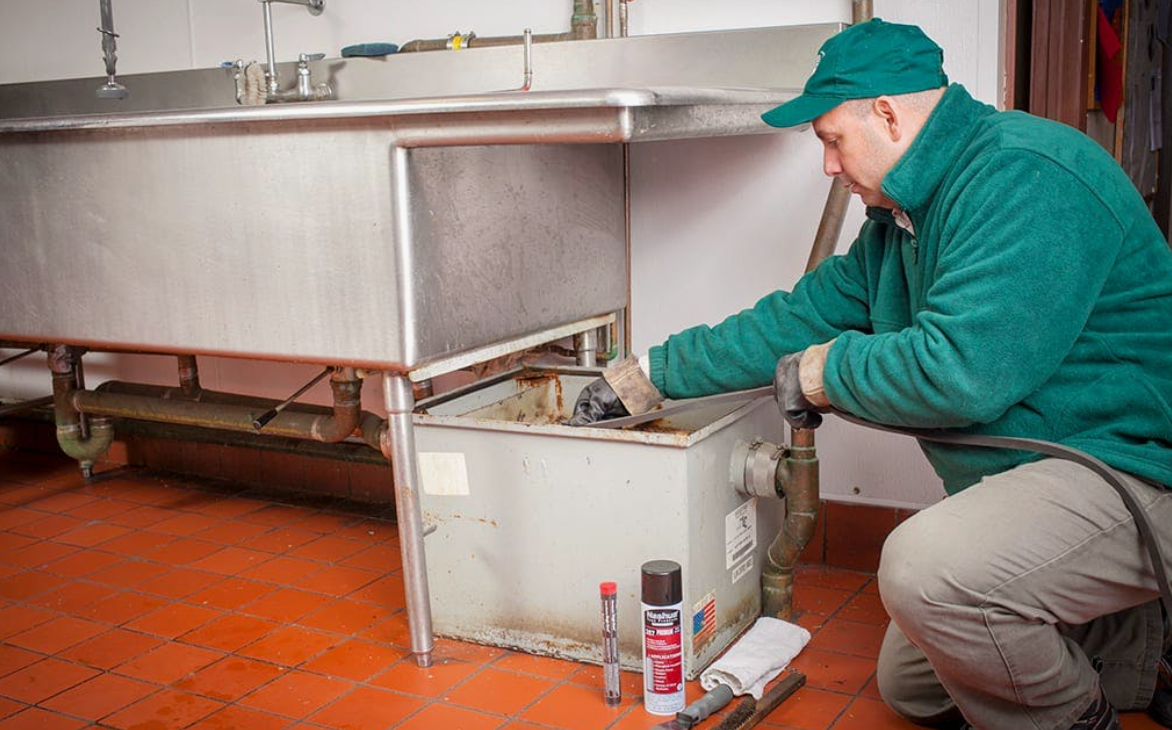
Many areas regulate grease traps and interceptors, which keep grease out of the public sewer system. These have to be cleaned and pumped on a schedule, and records have to be kept. Skipping this can bring fines from the local authority on top of the mess of a backed-up system.
Where Grease Hides
Grease does not stay where it starts. It travels as vapor, settles on cool surfaces, and works its way into spots that a quick wipe-down never reaches.
The exhaust hood and filters catch a huge share of it, and the ductwork above carries the rest. Floors and walls near the line collect a sticky film. Fryers, grills, and the vents around them hold grease in their seams and under their bases. The spots behind and beneath equipment build up grime that rarely sees a mop. Much of this sits out of sight, which is exactly why it gets missed until an inspector pulls equipment aside to look.
Restaurant Grease Cleaning Regulations & the Schedule They Demand
Meeting restaurant grease cleaning regulations comes down to a schedule that matches how fast each area builds up. The rules do not just ask for a clean kitchen. They ask for proof that the cleaning happens on time, every time.
Daily tasks cover the cooking line, floors, and any surface grease touches during service. Wiping these down at the end of each shift keeps buildup from setting in, since grease that sits overnight hardens and gets far tougher to remove. Weekly tasks reach the slower-building spots like the areas behind equipment. The deep work on the hood, filters, and ductwork happens on a longer cycle set by how heavily the kitchen cooks.
Keeping Records
Compliance often comes down to proof. Fire inspectors and insurers want to see that the exhaust system gets cleaned on schedule, and the local authority wants records of grease trap service. A kitchen that keeps clear logs answers these questions on the spot instead of scrambling. Good records also protect a restaurant if a claim or a dispute ever comes up.
Why the Exhaust System Needs a Pro
The cooking line of a kitchen can mostly handle itself. The exhaust system is another story. Hoods, filters, and ductwork build up grease in places that are hard to reach and harder to clean safely. The job calls for the right tools, the right products, and someone who knows how to clean the system down to the metal without damaging it.
This is where many restaurants bring in outside help. A company like Legacy Shines Services, which handles post-construction and specialty commercial cleaning around Concord, NC, can take on the heavy degreasing work and leave behind the records that inspectors and insurers want to see. Trying to handle exhaust cleaning in-house usually means a half-clean job and a paper trail that does not hold up.
What a Professional Clean Covers
A proper exhaust cleaning reaches the hood, the filters, the ducts, and the fan on the roof. It removes the grease that daily wiping never touches and brings the whole system back to a state that passes inspection. Done on a regular cycle, it keeps the fire risk low and the kitchen ready whenever an inspector walks in.
Staying Ready Between Inspections
The kitchens that pass inspections without stress are the ones that treat every day like inspection day. They do not scramble to clean when an inspector is due. They keep the line clean during service, reset every night, and bring in help for the exhaust system on schedule.
The habit carries over to the staff. When a clean line is just how the kitchen runs, the team keeps it that way on their own. Nobody has to be told to wipe down a station when wiping down is how every shift ends. That culture is what separates a kitchen that scrambles before inspections from one that is always ready.
The Cost of Falling Behind
When grease cleaning slips, the cost shows up fast and from several directions. A failed health inspection can close a kitchen until it passes again. A grease fire can shut it down for far longer. Fines from missed grease trap service add up. Set against all of that, the cost of staying on schedule looks small. Compliance is the cheaper path by a wide margin.
Before You Go
Grease is unavoidable in a working kitchen, but a compliance problem is not. Fire codes, health inspection standards, and grease trap rules all tie back to keeping grease under control, and falling short carries real cost. Following restaurant grease cleaning regulations means a schedule that matches each area, daily resets on the line, professional work on the exhaust system, and clear records to prove it all. Many restaurants lean on a crew like Legacy Shines Services for the heavy degreasing and the paperwork that comes with it. Stay on schedule, keep the records, and inspections become a routine the kitchen already handles every day.
 logibrisk