
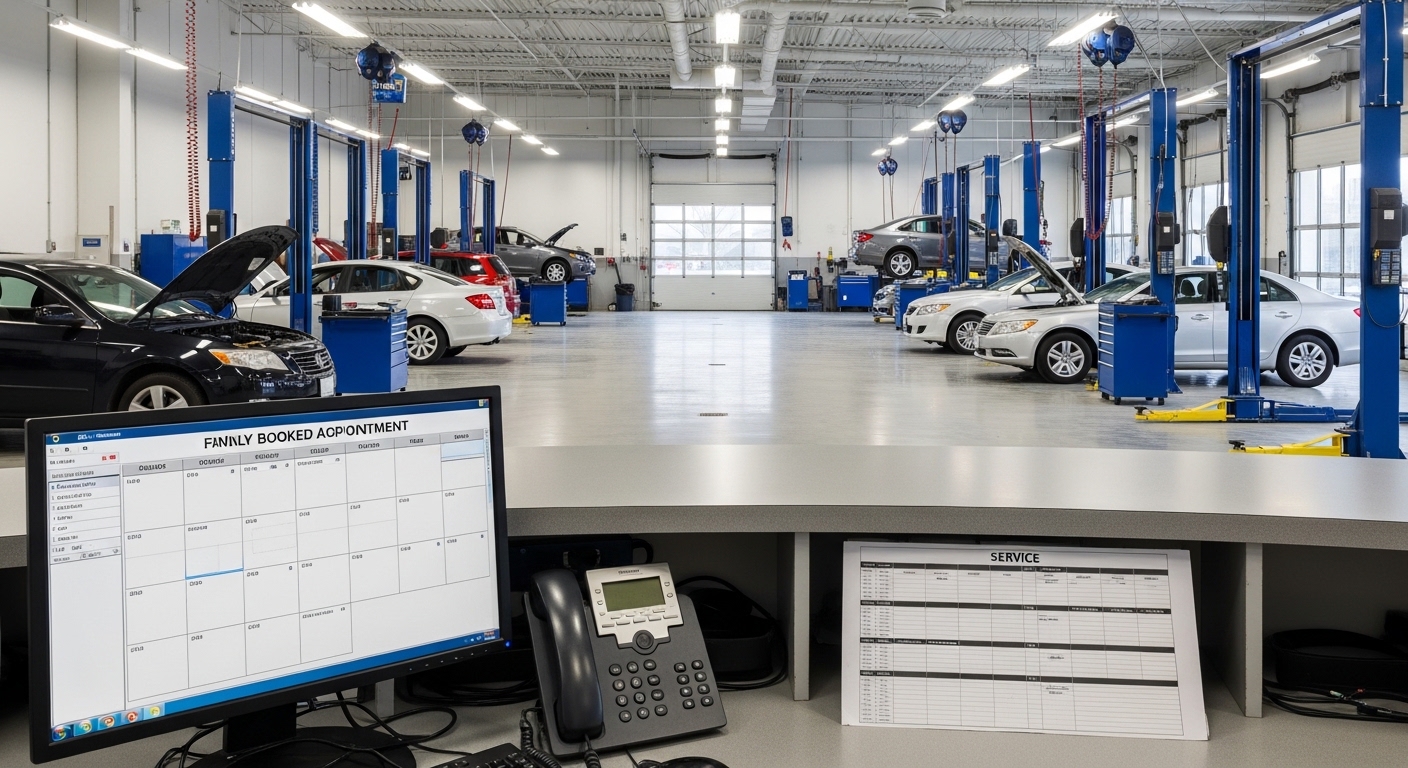
Walk through a dealership service bay on a Monday morning, and you’ll usually find it fuller than expected. Cars lined up, technicians already working, the day running at capacity before most businesses have finished their first coffee. What’s less visible is how those bays got filled. A chunk of that Monday morning work didn’t come from calls made during business hours on Friday. It came from calls made Friday evening, Saturday afternoon, Sunday morning — hours when the service desk was dark, and a competitor’s would have been too. Except this dealership had something running that the others didn’t.
Service Customers Don’t Plan Around Dealership Hours
This is the core of the problem, and it’s one that dealership service departments have lived with for years without a clean solution. A customer notices something wrong with their vehicle on a Saturday morning. Maybe a warning light. Maybe a noise they’ve been ignoring all week that finally got loud enough to act on. They want to book a service appointment, and they want to do it now while the motivation is fresh. When they call the dealership and reach a voicemail, that motivation has nowhere to go. Some leave a message. Most don’t. And by Monday morning, when someone finally calls back, the customer has either booked with an independent shop, tried another dealership, or simply delayed the service indefinitely.
The Monday Morning Callback Pile Is a Symptom, Not a System
Most dealership service managers know the Monday morning callback list well. A stack of voicemails from the weekend is sitting in a queue, each one representing a customer who tried to reach the dealership and didn’t get through. Working through that list takes hours. Some numbers don’t pick up. Some customers have already sorted it elsewhere. Some are still interested, but the warm moment that prompted their original call is long gone, and converting them now requires more effort than it would have taken to simply answer when they called. The callback pile isn’t a workflow. It’s evidence of a system that wasn’t built for the hours its customers actually operate in.
What an AI BDC Agent Changes About That Dynamic
A properly built AI BDC Agent for Car Dealerships running through evening and weekend hours doesn’t hand the customer a voicemail. It has an actual conversation. It asks what the customer is experiencing with their vehicle, understands the nature of the service need, checks availability, and books the appointment directly into the service schedule. The customer called, got helped, and has a confirmed appointment before they’ve had a chance to consider the alternative. The service bay slot that would have sat empty Monday morning is now filled. The customer who might have gone to a quick lube shop down the road is now a confirmed dealership service appointment.
After Hours Isn’t a Niche Window, It’s Half the Week
Add up the hours between Friday at 6 PM and Monday at 8 AM. Then add the weekday evenings between 6 and 9 PM when customers are home, relaxed, and finally getting around to the things they’ve been meaning to handle. That’s a substantial portion of the week during which customers are ready and willing to book service appointments, and most dealerships are completely unavailable to receive them. The dealerships filling their bays consistently aren’t necessarily doing better marketing or offering better service. They’re just present during those windows in a way that captures demand their competitors are sleeping through.
First Time Callers Decide Fast and Don’t Always Call Back
A customer with no existing loyalty to a particular dealership who calls after hours and reaches a capable, helpful response has essentially made their decision in that moment. They booked. They’re coming in. The relationship started. A customer who called and reached nothing has no particular reason to try that dealership again, specifically. They’ll call whoever answers next time. Dealerships that understand this recognize that after-hours availability isn’t just about capturing one appointment. It’s about establishing the first touchpoint of what could become a long-term service relationship worth significantly more than the value of a single job.
Understanding What an AI Front Desk Actually Means in This Context
There’s still genuine confusion in some business conversations about what these systems actually do versus what people assume they do. So, What Is an AI Front Desk in a dealership service context specifically? It’s a system that answers the phone in real time, holds a natural conversation with the caller, understands what they need, accesses the service schedule, books the appointment, and confirms the details — all without a human involved and all at any hour the customer chooses to call. It’s not a phone tree. It’s not a chatbot asking the caller to press numbers. It’s a capable first point of contact that handles the entire booking interaction from start to finish.
The Service Advisor’s Morning Gets Better Too
There’s a team benefit here that doesn’t get discussed as often as the revenue angle. Service advisors who walk in on Monday morning to a pre-filled schedule rather than a callback mountain start the day differently. They’re managing confirmed appointments rather than chasing uncertain leads. The work is more focused, less reactive, and more productive from the first hour. The customers arriving already have confirmed appointments rather than being walk-ins who called over the weekend and were told someone would get back to them. The entire service department runs more smoothly when the weekend call handling is done properly rather than deferred entirely to Monday.
Competitors Are Still Sleeping Through These Hours
That’s the quietly competitive reality sitting underneath all of this. In most markets, the majority of dealerships are still handling after-hours calls the same way they always have — with a voicemail greeting and a Monday morning callback list. The dealership that stops doing that doesn’t just improve its own numbers. It absorbs the after-hours demand that its competitors are leaving uncaptured. Every weekend service booking that goes to a dealership running proper after-hours AI coverage is a booking that didn’t go to the dealership down the road, still relying on voicemail. That gap compounds week after week into a service revenue advantage that becomes increasingly difficult to close from the other side.
The Bay Fills Itself When the Phone Works Properly
That’s ultimately what this comes down to. The demand is already there. Customers are already calling during evenings and weekends with real service needs and a genuine intent to book. The only question is whether the dealership is set up to receive that demand when it arrives or whether it’s letting it drain away into voicemail queues and competitor bookings every single weekend. The service bay doesn’t fill because of better marketing or a larger team working longer hours. It fills because when a customer called on a Saturday evening, ready to book, something capable and helpful picked up and made it easy for them to do exactly that.

 jezzylin
  edugatewayabroad