
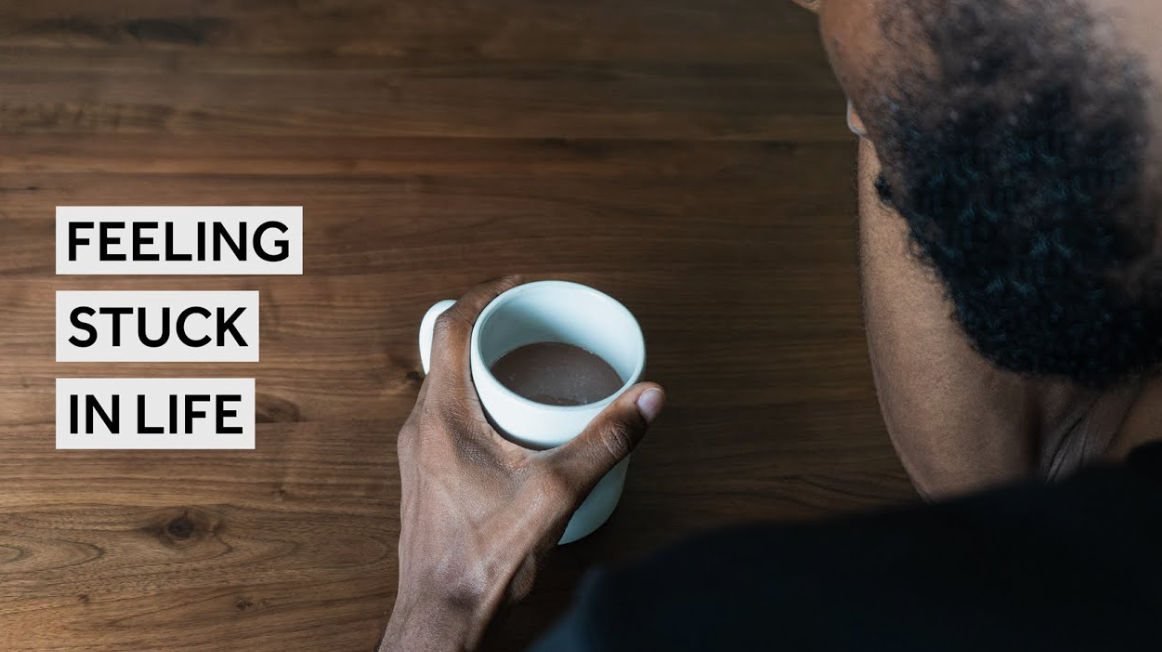
There’s a particular kind of stuck that doesn’t show up as crisis.
You’re not falling apart. You’re not in acute pain. You’re functioning. The bills are getting paid. The relationships are mostly intact. The work is happening. From the outside, you look fine.
Inside, something hasn’t been moving for a long time. You can feel it. The days have a sameness that you’ve stopped enjoying. The years are starting to look alike. The questions about what you actually want from your life keep getting pushed off because there’s no urgency forcing them. And underneath everything, a quiet sense that you’re not living the life you were meant to be living, but you can’t quite articulate what the alternative would even look like.
If you’ve been searching for help on feeling stuck in life because the stuck feeling has been around longer than you wanted to admit, you’re paying attention to something that doesn’t always announce itself loudly enough to demand action. Most stuck phases don’t have crisis points. They have slow accumulations of years lived on autopilot. The work of breaking free isn’t about a single dramatic move. It’s about specific practices that, applied over time, restart the forward motion.
Let’s go through what actually helps.
Why Stuck Is So Hard to See Clearly
The first thing to know. Stuck phases are particularly hard to see from inside, because the very stuckness produces a kind of mental fog that makes the situation hard to assess.
When your life is in active crisis, you can see what needs to shift. The problem is clear. The solutions, even when they’re hard, are usually visible. The urgency forces clarity.
In a stuck phase, there’s no urgency. The discomfort is low-grade. The dissatisfaction is chronic but not acute. The mind, without a crisis to focus on, starts to accept the current state as normal. Months pass. Years pass. The stuckness becomes the baseline, and you forget that it wasn’t always this way.
This is why so many women find themselves five or ten years into a stuck phase, suddenly waking up to it, wondering how the time passed. The slowness of the stuck isn’t dramatic enough to demand action. The chronic-ness of it makes it hard to see as a problem.
The first move in getting unstuck is recognizing that you’re stuck. Not in a crisis way. In a slow accumulation of years that haven’t been moving you toward anything specific.
Stop Waiting for Clarity to Arrive on Its Own
A pattern that keeps stuck women stuck. Waiting for clarity to arrive before taking action.
The thinking goes like this. Once I know what I really want, I’ll be able to move. Until then, I have to keep figuring out what I want, in my head, on my own time, mostly through thinking.
The thinking doesn’t usually produce the clarity. You can think for years and still not know what you want. The clarity tends to come from action, not from thought. Trying things. Doing small experiments. Putting yourself in new contexts. Noticing what you find yourself drawn to when you’re in motion.
A practice. Stop trying to think your way to clarity. Start doing small experiments instead. Take the class. Have the coffee with someone whose work interests you. Try the side project. Sign up for the thing that’s been on your list. The small experiments produce data that thinking can’t produce.
After a few months of small experiments, the patterns become visible. Some experiments lit you up. Others didn’t. The lit-up ones point in a direction. The not-lit-up ones rule out paths. The clarity emerges through the doing, not through the deliberating.
This requires giving up the demand for certainty before acting. The certainty isn’t available from your current position. The next position, after a few experiments, has better information.
Notice What You’re Avoiding
A piece of unstuck work that almost no one prescribes. Notice what you’re consistently avoiding.
The conversation you’ve been postponing for two years. The decision you’ve been deferring. The truth you’ve been refusing to look at. The change you’ve been putting off until the time was right.
These avoidances are often where the stuckness lives. The stuck phase is partly built on the cumulative weight of what you’ve been refusing to address. Each avoidance is a small drain on your energy. Together, over years, they produce a chronic exhaustion that keeps you from having the energy to make changes.
A practice. Sit down once and write a list. What have you been avoiding. Be honest. The conversations. The decisions. The truths. The changes you’ve been postponing.
When the list is written, you don’t have to act on all of it. You have to look at it. Most women, when they look at the list, find that there are one or two items that are doing most of the draining. Addressing those one or two often unsticks more than tackling all of them at once.
The willingness to look at what you’ve been avoiding is, itself, the start of the unstuck work.
Build Daily Practices That Restore Energy
A practical move. Build daily practices that put energy back into your system, so you have what you need to make changes.
Stuck phases run on depleted energy. The same chronic-ness that makes them hard to see makes them exhausting to live in. By the time you realize you want to make changes, you often don’t have the energy to make them. The energy itself has to be rebuilt first.
The basics. Sleep that mostly happens. Real food at regular times. Daily movement of some kind. Limited caffeine. Limited alcohol. Time outside, regularly. Some kind of restorative practice that isn’t productive, just for the body’s recovery.
These sound boring. They’re the foundation. Most stuck women who actually get unstuck started by addressing the basics first. The energy that returns from better sleep, real food, and daily movement is the energy that powers the harder work of changing patterns.
Trying to make big life changes from a depleted body usually doesn’t work. The body doesn’t have the resources for sustained effort. The changes get attempted and abandoned. The cycle reinforces the stuck.
Building the daily practices first, even for a few months before tackling the bigger questions, gives you the foundation to actually move when you decide to.
Get Outside Perspective That Isn’t Your Friends & Family
A piece of unstuck work that often makes the difference. Getting outside perspective from someone who isn’t already in your life.
Friends and family have a place. They love you. They mean well. They also have a stake in the version of you they currently know. Their advice, even when well-intentioned, often subtly steers you back toward the patterns you’ve been in. Not because they don’t want what’s best for you. Because they don’t always know what your best is, and they’re often operating from their own preferences about what your life should look like.
Outside perspective from a coach, a therapist, or a mentor who specializes in the kind of work you’re trying to do can produce shifts that years of friend conversations couldn’t. The outside perspective is neutral. The questions they ask don’t have a stake. The frameworks they offer come from working with many people in similar situations.
When She Speaks… Listen, the practice founded by Gina, works specifically with women who are at this kind of crossroads. The stuck phase that doesn’t quite qualify as crisis but has been going on too long. The transition that’s been needed for years and hasn’t quite happened. The clarity that’s been waiting for the right conditions.
The work in a practice like this involves structured conversations that surface what you haven’t been able to see on your own. The patterns that have been hiding in plain sight. The avoidances that have been draining you. The directions you’ve been quietly drawn to but haven’t named. The outside perspective accelerates what years of inner work might not have produced.
For women who’ve been stuck for a while, the investment in outside perspective is often the move that breaks the pattern.
Start Small, Move Often
A specific approach to actually moving. Start small, but move often.
The temptation, when you’re stuck, is to wait for the big move. The dramatic shift. The single decision that will change everything. The waiting for the big move can extend for years.
The cleaner approach is to start small, but to move often. A small action this week. A small experiment next week. A small conversation the week after. The momentum of frequent small movements is what shifts the stuck.
Each small action produces evidence. You did something. You survived doing it. You learned something from doing it. The evidence accumulates. The mind that’s been telling you you can’t change has to update its read, because the actions are contradicting it.
After a few months of small frequent movements, the larger shifts become available. The big moves that felt impossible six months ago feel possible now, because the smaller movements have built the capacity for them.
The starting small isn’t a compromise. It’s the actual mechanism by which unstuck happens. Big moves attempted before the smaller ones have built the foundation usually fail.
You Don’t Have to Have It All Figured Out
The final piece. You don’t have to have your whole next chapter figured out before you start moving.
The stuck stays stuck partly because of the unspoken belief that you have to know where you’re going before you can start. The destination feels too big to know. So you don’t start.
You can start without knowing. The direction will emerge from the movement, not the other way around. The next chapter will get written in the doing, not in the planning.
The women who break out of long stuck phases usually didn’t have a clear picture of where they were going when they started. They started moving, in small ways, in directions that felt slightly more alive than the stuck did. The movement produced clarity. The clarity produced more movement. The chapter took shape through the doing.
That can be you. The stuck doesn’t have to be your permanent state. The movement starts whenever you decide it starts. The work of finding out what’s possible begins with the first small action.
If you’re ready to start with someone who can hold the work alongside you, reach out to schedule an introductory call with Gina at When She Speaks… Listen. The conversation alone often surfaces things that weeks of solo thinking couldn’t, and the work, once it begins, has a way of producing the kind of shift you’ve been waiting for.
 logibrisk