
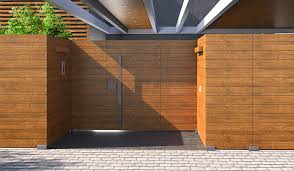
You want an exterior that looks contemporary, lasts, and requires minimal upkeep. Facade Panels Exteriors give you flexible options—metal, glass, stone, wood, porcelain, and composite systems—that balance aesthetics, weather resistance, and ease of installation so you can select the right cladding for your project.As you explore materials and systems, you’ll see how choices affect thermal performance, maintenance, and installation methods. Modern Facade Panels Exteriors are designed to improve durability, energy efficiency, and visual appeal while offering architects and property owners greater design flexibility. This article walks through modern panel types and the design and performance considerations that matter most to your building’s longevity and curb appeal.
Types of Modern Exterior Cladding
Modern facade panels vary by material, panel geometry, and whether they form a ventilated rainscreen or a sealed surface. You’ll choose based on durability, fire performance, maintenance, weight, and the visual effect you want.
Materials Overview
You can pick from metal, fiber cement, natural stone, terracotta, engineered wood, and high-pressure laminate (HPL).
- Metal (aluminum, steel): Lightweight, recyclable, and available in coils or composite panels. Aluminum resists corrosion if coated; steel needs proper galvanizing or stainless grade for longevity.
- Fiber cement: Strong, non-combustible, and dimensionally stable. It mimics masonry or wood with low maintenance but adds dead load to the structure.
- Natural stone and terracotta: High durability and premium appearance; heavier and typically require reinforced supports and careful detailing at joints.
- Engineered wood and HPL: Warm appearance with modern coatings; HPL offers good weather resistance, while engineered wood needs weatherproofing and regular upkeep.
Specify fire ratings (A1, A2, or combustible classifications) and expected maintenance cycles when comparing. Consider panel weight and substrate capacity early in design to avoid structural redesigns.
Panel Formats and Shapes
Panels come in flat sheets, corrugated profiles, angled fins, and custom three-dimensional forms.
- Flat and rectilinear panels: Common for rainscreens and curtain walls; they simplify installation and allow precise alignment.
- Ribbed, corrugated, or perforated panels: Offer shadowing and acoustic control; perforation patterns affect airflow and visual transparency.
- 3D molded or folded panels: Create pronounced relief and can conceal fasteners; they demand tighter fabrication tolerances.
- Large-format slabs vs. modular tiles: Large slabs reduce visible joints but increase handling and substrate requirements; modular tiles ease replacement and patterning.
Fastening method matters: concealed clip systems preserve aesthetics, while visible rivets or screws reduce upfront cost. You should weigh fabrication lead time, transportation limits, and on-site crane or lift needs when selecting complex shapes.
Comparing Ventilated and Non-Ventilated Solutions
A ventilated rainscreen creates an air cavity behind the panels to manage moisture and heat; a non-ventilated cladding attaches directly to the substrate or insulation.
- Ventilated (rainscreen): Promotes drying, reduces thermal bridging, and extends facade life. You’ll need vents at the top/bottom, insect mesh, and careful detailing at openings to prevent water ingress.
- Non-ventilated (direct-fixed or barrier): Simpler and cheaper for dry climates or secondary elevations. It demands high-quality seals and weatherproof membranes because water and vapor must be controlled at the surface.
Thermal and acoustic performance differ: ventilated systems typically improve cooling and can reduce HVAC load, while non-ventilated systems can be more compact and lighter. Match system choice to climate, fire strategy, maintenance access, and the retrofit or new-build constraints on wall build-up.
Design & Performance Considerations
You need to balance appearance, environmental control, and practical installation as you select exterior facade panels. Prioritize materials, detailing, and attachment methods that meet the project’s climate, fire code, and maintenance expectations.
Aesthetic Flexibility
Choose panel materials and finishes that match your design intent and site context. Aluminum composite panels offer tight tolerances for flush joints and can be curved or perforated for complex forms. Fiber‑cement and high‑pressure laminate panels provide textured, matte, or wood‑effect surfaces when you want a more tactile appearance.Specify color systems and coatings for long‑term uniformity. Use PVDF or fluoropolymer paints on metals for fade resistance, and request manufacturer color‑fastness data and warranties. Consider panel size and joint width: larger panels reduce visible seams but increase handling, transport, and substrate flatness requirements.Account for panel replacement and future modifications. Design accessible anchorage and modular layouts so you can swap damaged panels or upgrade facades without major demolition.
Thermal and Moisture Resistance
Control heat transfer and moisture at the assembly level, not just at the panel face. Combine insulated backings or continuous insulation with ventilated cavities to reduce thermal bridging and allow interior drying. Specify a continuous air and vapor control layer with clear material transitions at openings and penetrations.Select panel substrates and fasteners suited to the local climate. Use corrosion‑resistant anchors in coastal or industrial environments. Ensure the rain‑screen detailing includes drainage paths, insect screens, and weep holes sized per manufacturer guidance.Request performance data: U‑values for full assembly, water penetration test results (ASTM/EN standards), and hygrothermal modeling for cold or humid climates. Tie fire performance to the overall system; combustible cores require specific setbacks, sprinklers, or non‑combustible alternatives to meet code.
Installation Techniques
Define the attachment system early; it governs tolerances, sequencing, and trades on site. Choose between unitized panels, cassette systems, or stick‑built rainscreens depending on site access and schedule. Unitized systems speed installation but need precise shop fabrication and tighter coordination.Detail interfaces clearly in shop drawings: anchorage locations, substrate flatness requirements, sealant joint sizes, and thermal movement allowances. Use pre‑specified tolerances for alignment and deflection limits for the supporting structure to avoid visible distortion.Plan for quality control: set inspection points for anchor torque, sealant adhesion, and flashings. Provide installers with manufacturer installation manuals and field training. Specify mock‑ups for approval to validate appearance, water performance, and attachment before full installation.
 Theodore
  umarkhan
  ruchirbacklinks