
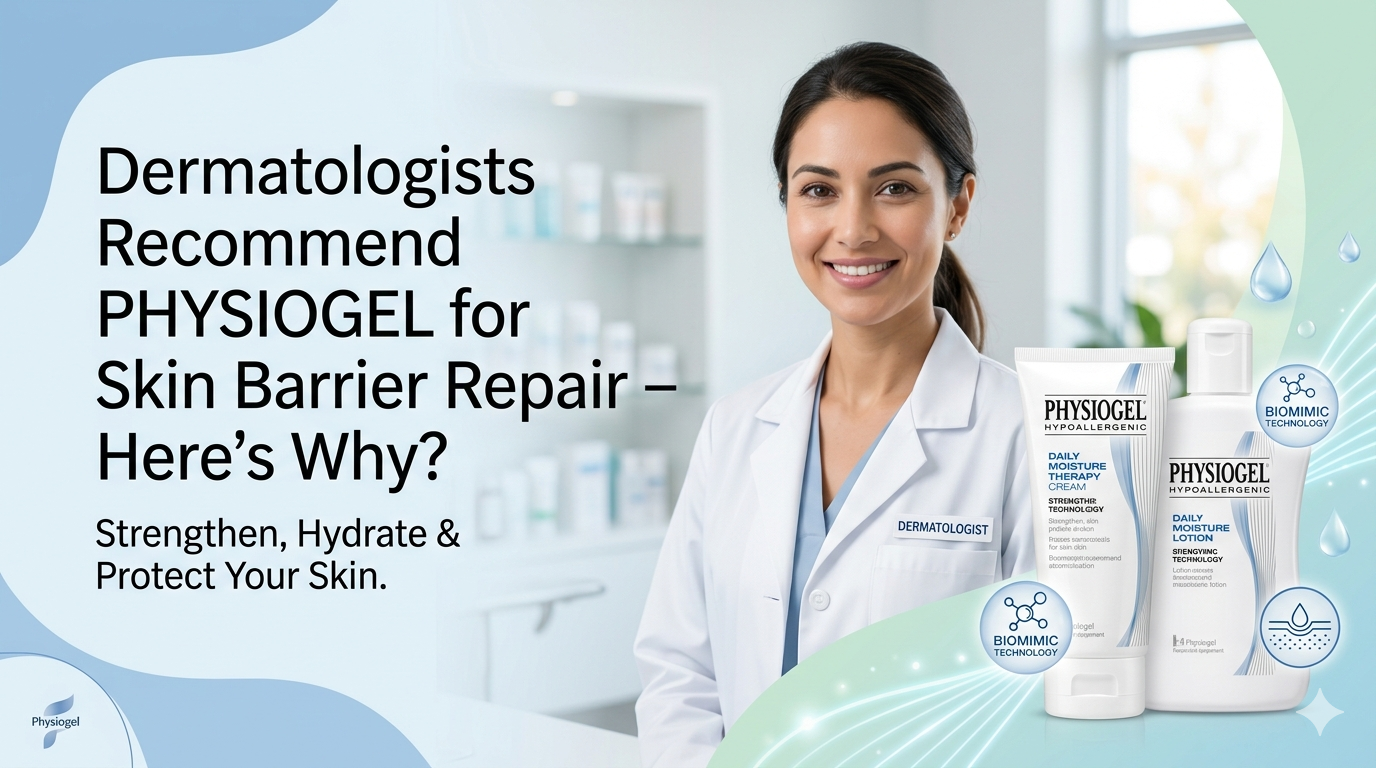
Why your skin can suddenly feel “wrong.”
One day, your skin looks normal. Next, it feels tight, hot, flaky, and weirdly sensitive even to water. That change can feel dramatic, but it is not rare. Eczema, a condition tied closely to barrier trouble, affects about 10% to 30% of children and 2% to 10% of adults in the United States.
That is why skin barrier repair matters so much. And it is also why Physiogel keeps coming up in dermatologist-led conversations around dry, sensitive skin.
This guide breaks down why people reach for it, who it may help most, and how to use it without making stressed skin even more upset.
Why Skin Barrier Repair Matters More Than Fancy Skincare
Your skin barrier is your outer shield. Its job is simple but important: keep water in and help keep irritants out. When that barrier gets weak, skin loses moisture faster and starts reacting more easily. In eczema, for example, the skin develops tiny cracks and loses water quickly, which is one reason dermatologists push frequent moisturizing.
What Damaged Barrier Skin Often Feels Like
- tight after washing
- red for no clear reason
- rough or flaky
- stingy when you apply products
- extra reactive in cold weather, after exfoliation, or during stress
If that sounds familiar, you usually do not need a “stronger” routine. You need a calmer one.
Why Physiogel Stands Out for Barrier Repair
What makes Physiogel different is that it leans into barrier support instead of chasing a flashy finish. The brand’s Daily Moisture Therapy and Calming Relief products are described as being inspired by skin’s natural structure and built to strengthen and restore the skin’s moisture barrier. The National Eczema Association product listings for these items also highlight skin-like lipids and barrier support.
It Works in a Skin-like Way
Barrier repair creams often rely on lipids and ceramides because those materials help form a protective layer on the skin, locking in moisture while keeping out irritants. That is part of why dermatologists and eczema educators keep pointing people toward barrier-first moisturizers.
It is Made for Sensitive Skin Behavior
Some Physiogel products are described by official brand sources as hypoallergenic, dermatologist-tested, and non-comedogenic. That matters because people with barrier damage usually do better with simple, low-fuss formulas.
It is Not Only About Softness
A weak barrier does not just look dry. It can burn, itch, flush, and feel “thin.” The Calming Relief line, for example, is positioned for redness, itch, and reactive skin, while the Daily Moisture Therapy line fits everyday dryness and sensitivity.
What Dermatologists Want in a Barrier Cream
Dermatologists tend to keep this part very simple. A good barrier repair moisturizer should be gentle, easy to use often, and able to hold moisture in the skin. The American Academy of Dermatology advises using a gentle, fragrance-free moisturizer and applying it right after bathing because that helps hold water in the skin.
That logic is a big reason Physiogel makes sense. It fits the “do less, protect more” approach.
Who May Benefit Most from Physiogel?
Physiogel may be a smart pick if your skin is:
- Dry and sensitive
- Reacting badly to weather changes
- Feeling irritated after overdoing acids or retinoids
- Eczema-prone
- Suddenly stinging from products you used to tolerate
When a Cream is Not Enough
If your skin is cracked, oozing, badly inflamed, or showing signs of infection, do not rely on moisturizer alone. Eczema and severe dryness can raise the risk of skin infection, and some cases need medical care, not just a better cream.
How to Use Physiogel Without Overthinking it
Keep the Routine Boring for a Few Days
When your barrier is upset, boring is good.
- Wash with a gentle cleanser.
- Pat skin so it stays slightly damp.
- Apply Physiogel right away.
- Use it morning and night.
- Pause strong exfoliants for a bit.
This is where many people go wrong. They keep adding serums, acids, masks, and “repair” products all at once. A damaged barrier usually gets better when you remove friction, not when you stack more steps.
Which Physiogel Type Makes More Sense?
If your main issue is plain dryness and tightness, the Daily Moisture Therapy side usually feels like the safer starting point. If redness, itch, and reactivity are the bigger problems, the Calming Relief side may be the better match.
Where to Buy it Stress-free
If you are buying from a trusted online skincare platform, look for sealed packaging, clear product photos, full ingredient details, and fresh stock. That matters more than flashy discounts. When your skin is reactive, authenticity and proper storage matter just as much as the formula.
In a Nutshell
When your skin barrier is damaged, life gets annoying fast. Your face feels tight, your usual products sting, and even a simple wash can feel like too much. That is why Physiogel keeps getting attention. It speaks to what stressed skin actually needs: fewer triggers, more comfort, and barrier-first support.
The bigger lesson is this: barrier repair is usually not about doing more. It is about doing less, choosing smarter, and giving your skin time to calm down. If your skin is dry, sensitive, or easily upset, Physiogel makes sense because it meets that moment without making things more complicated.
FAQs
Q1. Is Physiogel good for a damaged skin barrier?
Yes, that is one of the main reasons people use it. Its barrier-focused formulas are positioned to strengthen and restore the skin’s moisture barrier, especially in dry and sensitive skin.
Q2. Can I use Physiogel on acne-prone skin?
Some official product descriptions label certain Physiogel products as non-comedogenic, which means they are designed not to clog pores easily. Still, texture matters, so oily or acne-prone users should start with the lighter option that fits their skin type.
Q3. Which Physiogel is best for the face?
For simple dryness, Daily Moisture Therapy is the easier pick. For redness, itch, and very reactive skin, Calming Relief may be the better fit.
Q4. How long does skin barrier repair take?
It depends on how damaged your skin is and how simple your routine becomes. Mild barrier stress may improve in days, while deeper irritation can take longer. Consistent moisturizing right after cleansing or bathing is one of the most important basics.
Q5. Can I use Physiogel with retinol?
Yes, many people do. But if your skin is already burning, peeling, or stinging, it is smarter to pause retinol for a few days and let your barrier settle first. Then bring it back slowly.
 jame.smith
  mohsinlinks
  podolondon