
For drivers in Pakistan, the risk varies by location and use. Coastal air in Karachi can carry salt and moisture. Monsoon rain can leave water and road grime trapped in seams. In Lahore, Islamabad, Rawalpindi, Faisalabad, Peshawar, Quetta, and other cities, dust can hold moisture against neglected metal. Cars driven on rough roads may also collect stone chips that expose bare steel. Rust control is therefore not only a cosmetic task; it is part of sensible vehicle preservation.
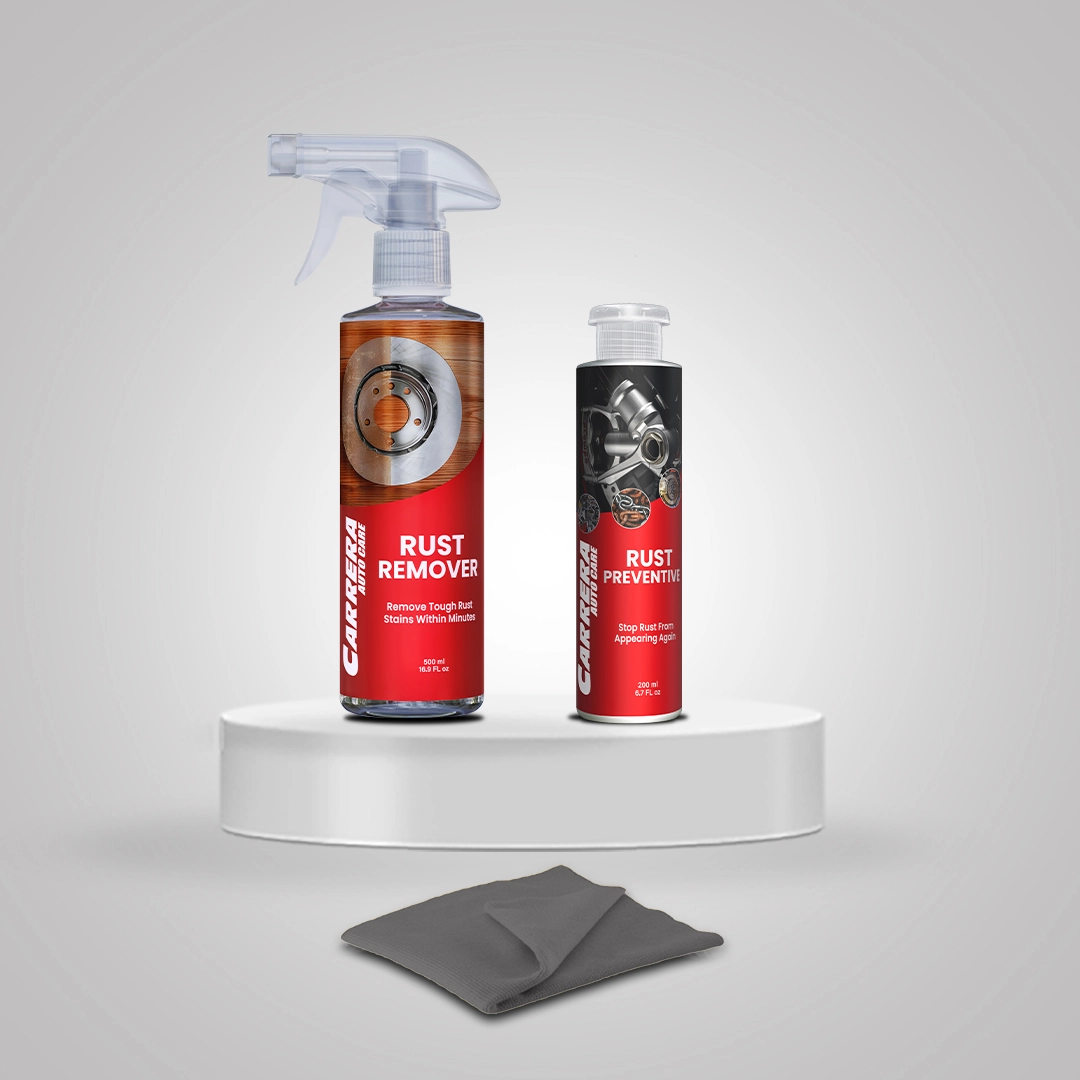
Carrera car care can support a disciplined detailing routine by helping owners treat visible corrosion before applying protective products. Always read the actual Carrera product label first because dwell time, compatible surfaces, dilution, and safety directions can differ by formula.
What a Rust Remover Does
A rust remover is designed to loosen, dissolve, or convert iron oxide on suitable metal surfaces. It is not the same as a polish, degreaser, or rust preventive. A remover addresses existing corrosion. A preventive helps reduce the chance of corrosion returning. For durable results, these jobs often belong in the same workflow.
Rust removal also has limits. If metal is deeply pitted, perforated, structurally weakened, or located near a safety-critical component, a chemical treatment is not a substitute for professional repair. Severe corrosion on brake parts, suspension mounting points, chassis sections, fuel-system components, or seat-belt anchorage points should be inspected by a qualified technician.
Where Rust Commonly Appears on Cars in Pakistan
### Wheel Arches and Lower Body Edges
Mud, grit, and water are thrown toward wheel arches and rocker areas. Chips in paint or underbody coating can create an entry point for corrosion.
Battery Trays and Engine-Bay Brackets
Moisture, grime, and battery residue can attack painted or unpainted metal. Work carefully around electrical connections and follow battery safety procedures.
Door Hinges, Latches, and Fasteners
These areas can be overlooked during washing. Their moving parts and narrow gaps also make complete drying difficult.
Exhaust and Underbody Components
Some surface oxidation is expected on high-temperature exhaust parts, but a general automotive rust remover may not be suitable for every alloy, coating, or hot component. Confirm compatibility before use.
Stone Chips on Bonnets and Roof Edges
A tiny chip may expose steel. Removing the rust is only one stage; the spot may also need primer, matching touch-up paint, and a protective top layer.
How to Use Rust Remover Safely
### 1. Choose a Cool, Ventilated Work Area
Park in shade, allow the vehicle to cool, and avoid applying chemicals to hot metal. Good ventilation and adequate lighting make it easier to see the condition of the surface.
2. Wear Appropriate Protection
Use gloves and eye protection recommended on the label. Keep the product away from children, food, flames, and sensitive household surfaces. Do not mix it with another chemical unless the manufacturer explicitly permits it.
3. Wash and Degrease the Area
Loose dirt, grease, wax, and road film can prevent even contact. Clean the affected part and dry it. Mask nearby paint, rubber, plastic, polished metal, or electrical parts if the label warns against contact.
4. Remove Loose Flakes
Where appropriate, use a suitable brush or abrasive to remove loose rust and failing paint. Do not grind aggressively on thin panels or safety-critical parts. The goal is to expose stable material without creating avoidable damage.
5. Test a Small Spot
Apply Carrera Rust Remover to an inconspicuous point according to the package directions. Check for staining, coating damage, or an undesirable reaction before treating a larger area.
6. Apply Only for the Directed Time
Use the recommended applicator and keep the product within the stated dwell time. More time is not automatically better. Allowing a strong formula to dry on the surface may create marks or complicate neutralisation.
7. Rinse, Wipe, or Neutralise as Directed
Follow the label exactly. Different chemical systems require different finishing steps. Remove residue thoroughly, then dry the area, including seams and fastener recesses.
8. Inspect and Repeat Only if Allowed
Light staining may lift in one pass, while pitted metal may need another controlled application. Stop if the base material or surrounding finish begins to change.
Protecting the Surface After Rust Removal
Freshly cleaned steel can begin oxidising again quickly in humid air. Do not leave it bare. Depending on the location, the next stage may include an appropriate primer, touch-up paint, cavity protection, underbody coating, lubricant, or Carrera Rust Preventive. The protective system should match the surface and operating temperature.
For visible painted panels, rust removal alone will not recreate the paint finish. A proper repair normally includes levelling the area, corrosion-resistant primer, colour coat, and clear coat. For hidden brackets or hardware, a preventive coating may be the practical finishing step. Keep coatings away from brake friction surfaces, belts, pedals, tyres, exhaust heat zones, and electrical contacts unless specifically approved.
Mistakes That Can Ruin the Result
One common error is treating rust through dirt. Another is applying remover across an entire painted panel without a compatibility test. Drivers may also leave residue in seams, skip drying, or forget to protect the cleaned metal. Using the same brush for wheels, paint, and rust work can transfer abrasive particles. Finally, painting over active corrosion may hide the colour temporarily while the damage continues below.
Avoid assuming every orange mark is rust. Iron fallout on paint can look similar but may need a dedicated decontamination product. Likewise, oxidation on aluminium is chemically different from rust on steel. Identify the material before choosing a treatment.
A Pakistan-Friendly Rust Inspection Routine
Inspect the car before and after the monsoon, after coastal travel, and after long drives through mud or standing water. Wash wheel wells and the underbody where safe, then dry accessible edges. Look beneath boot mats, around the spare-wheel well, inside door shuts, along drainage points, and around previous accident repairs.
Monthly checks take only a few minutes. Use a torch and note any paint bubbling, reddish staining, lifting seam sealer, or recurring dampness. Clear blocked drains carefully. If a spot grows between inspections, arrange repair rather than repeatedly hiding it with wax or paint.
Keep a simple corrosion record with dated photographs. Photograph the same point from a similar distance after cleaning and again at the next inspection. This makes slow changes easier to recognise and gives a body shop useful history. Record any product used, the preparation method, and the protective coating applied afterward. On older cars, compare the left and right sides because a recurring patch on only one side may reveal a blocked drain, previous accident repair, missing liner fastener, or local water leak that needs correction before another chemical treatment.
Why Choose Carrera for a Complete Car-Care Routine
Carrera is positioned as a car care brand for motorists who want practical maintenance products in one routine. A rust remover can handle existing surface corrosion, while cleaning and protection products help reduce the conditions that allow deterioration to return. The best results come from correct product selection, careful preparation, and strict label compliance—not from using extra chemical.
When shopping in Pakistan, purchase from a trusted Carrera seller and check the seal, batch information, directions, and storage condition. Store the container upright in a cool place away from direct sun and never transfer it into a beverage bottle.
Frequently Asked Questions
### Can rust remover be used on car paint?
Only if the specific label says it is safe for that painted surface. Many rust-removal formulas are intended for exposed metal and may mark paint. Test first and protect adjacent finishes.
Will rust remover stop rust permanently?
No treatment can promise permanent protection. It removes or treats existing corrosion; the cleaned area still needs a suitable coating and periodic inspection.
Can I use it on chrome parts?
Compatibility depends on the product and the condition of the plating. Damaged chrome can expose steel underneath. Test a hidden spot and follow the label.
Is surface rust on brake discs normal?
Light flash rust can appear after rain or washing and may clear during normal braking. Do not apply general rust remover or oily preventive to braking surfaces. Ask a mechanic about persistent, heavy, or uneven corrosion.
How often should I inspect my car for rust in Pakistan?
Check at least every few months, with extra inspections before and after monsoon season, after coastal exposure, and after driving through mud or floodwater.
Can severe rust be repaired at home?
Deep pitting, holes, structural corrosion, and rust near safety systems require professional assessment. Chemical cleaning cannot restore lost metal strength.
Conclusion
Using a rust remover correctly can rescue lightly corroded car parts and prepare metal for lasting protection. Clean first, test compatibility, respect dwell time, remove residue, dry completely, and protect the exposed surface without delay. With routine inspections suited to Pakistan’s dust, humidity, monsoon rain, and coastal conditions, Carrera Rust Remover can become a useful first step in a broader car-preservation plan.
 techsofttss
  ali
ali