
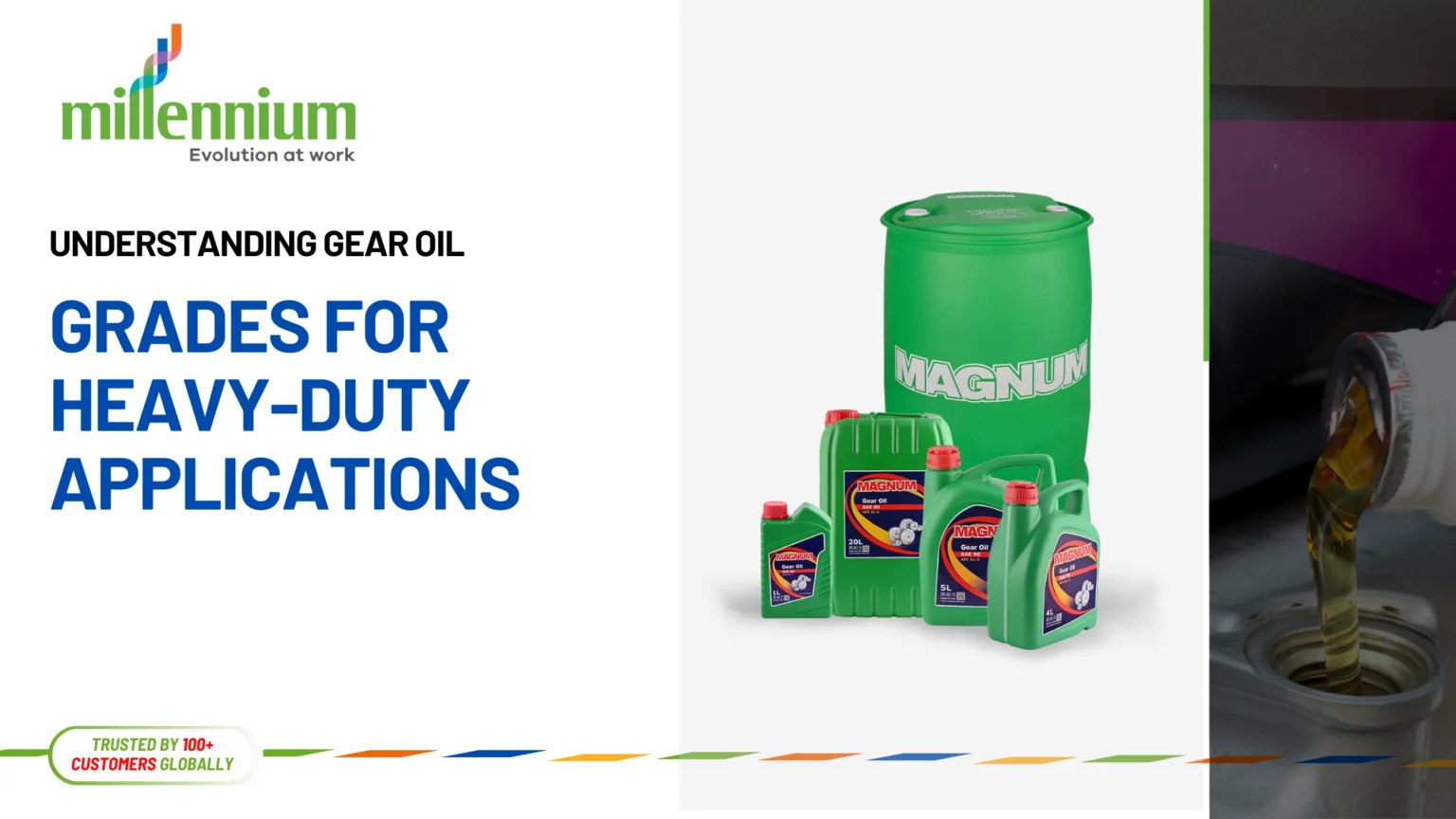
Gear oils play a crucial role in ensuring the smooth and efficient operation of heavy-duty machinery. From industrial gearboxes to construction equipment and mining machinery, the right gear oil helps reduce friction, protect components, and extend equipment life. However, selecting the correct gear oil can be challenging because different machines require different oil grades and performance characteristics. Understanding gear oil grades, viscosity, temperature stability, and additives can help operators choose the most suitable lubricant for demanding applications.
What Are Gear Oil Grades?
Gear oil grades refer to the classification of lubricants based on their viscosity and performance characteristics. These grades are designed to match the lubrication requirements of specific gear systems operating under varying loads and speeds.
Common gear oil classification systems include ISO viscosity grades (ISO VG) and SAE gear oil grades. ISO viscosity grades are widely used in industrial equipment and define the oil’s thickness at a standard temperature. For example, ISO VG 68, ISO VG 150, and ISO VG 320 represent different viscosity levels suitable for various gear systems.
SAE gear oil grades, such as SAE 75W-90 or SAE 80W-140, are more commonly used in automotive gearboxes and differentials. Each grade is formulated to provide optimal lubrication performance under specific operating conditions. Choosing the correct grade ensures proper film formation between gear surfaces, preventing wear and damage.
Why Viscosity Matters
Viscosity is one of the most critical properties of gear oil. It measures the oil’s resistance to flow and determines how well the lubricant forms a protective film between moving gear components.
In heavy-duty machinery, gears often operate under high pressure and load. If the oil is too thin, it may fail to maintain a sufficient lubrication film, leading to metal-to-metal contact, excessive wear, and potential equipment failure. On the other hand, if the oil is too thick, it can create unnecessary resistance, increasing energy consumption and reducing system efficiency.
The correct viscosity ensures that gears operate smoothly by reducing friction and dissipating heat. Proper viscosity also contributes to improved equipment efficiency, lower maintenance costs, and longer service life for gear components.
How ISO Grades Relate to Load Capacity
ISO viscosity grades are closely related to the load-bearing capacity of gear oils. Higher ISO grades generally indicate thicker oils that can withstand heavier loads and provide stronger lubrication films.
For example:
- ISO VG 68 is typically used in lighter gear systems or high-speed applications.
- ISO VG 150 is suitable for moderate loads and industrial gearboxes.
- ISO VG 320 and above are often used in heavy-duty machinery operating under extreme pressure.
The selection of the appropriate ISO grade depends on factors such as gear type, operating speed, load intensity, and environmental conditions. Equipment manufacturers usually specify the recommended viscosity grade to ensure optimal performance and reliability.
Temperature Stability — The Silent Performance Factor
Temperature plays a significant role in gear oil performance. Heavy-duty equipment often operates in environments where temperatures can fluctuate dramatically. In such conditions, gear oils must maintain consistent viscosity and lubrication properties.
High temperatures can cause oil to thin out, reducing its ability to protect gears from wear. Conversely, extremely low temperatures can make oil too thick, preventing proper circulation and lubrication during equipment startup.
High-quality gear oils are formulated with excellent thermal stability and oxidation resistance. These properties allow the lubricant to maintain its performance even under continuous high-temperature operation. Stable gear oils help prevent sludge formation, reduce deposits, and ensure reliable protection for gears over extended operating periods.
The Role of Additives in Gear Oil Performance
Additives play a crucial role in enhancing the performance of gear oils, especially in heavy-duty applications. Modern gear oils contain specially formulated additive packages designed to protect gears and improve lubricant durability.
Some common additives include:
- Extreme Pressure (EP) Additives – Protect gears under high load and shock conditions.
- Anti-Wear Additives – Reduce surface damage caused by friction.
- Rust and Corrosion Inhibitors – Protect metal components from moisture and oxidation.
- Anti-Foaming Agents – Prevent foam formation that could reduce lubrication efficiency.
- Oxidation Inhibitors – Extend oil life by preventing chemical breakdown at high temperatures.
These additives ensure that gear oils perform reliably in demanding industrial environments where heavy loads, high temperatures, and continuous operation are common.
Choosing the Right Gear Oil for Heavy-Duty Machinery
Selecting the right gear oil involves evaluating several factors related to the equipment and operating environment. Some key considerations include:
1. Operating Load
Heavy loads require higher viscosity oils with strong extreme-pressure additives to prevent gear wear and failure.
2. Gear Speed
High-speed gears typically require lower viscosity oils to reduce friction and heat buildup.
3. Temperature Range
Equipment operating in extreme temperatures requires gear oils with excellent thermal stability and viscosity control.
4. Gear Type
Different gear designs—such as helical, spur, bevel, or worm gears—have unique lubrication requirements.
5. Manufacturer Recommendations
Always follow the equipment manufacturer’s specifications for viscosity grade and lubricant type.
Choosing the correct gear oil ensures optimal gear performance, improved efficiency, and longer equipment life.
Maintenance Intervals and Monitoring
Proper maintenance practices are essential to maximize the performance of gear oils in heavy-duty machinery. Regular oil inspection and monitoring help detect early signs of contamination, oxidation, or viscosity breakdown.
Key maintenance practices include:
- Checking oil levels regularly
- Monitoring oil temperature during operation
- Conducting periodic oil analysis
- Replacing gear oil according to recommended service intervals
These preventive maintenance measures help avoid unexpected equipment failures and reduce long-term operating costs.
Why MAGNUM Gear Oils Stand Out
MAGNUM gear oils are designed to meet the demanding requirements of heavy-duty industrial and automotive applications. Formulated with advanced base oils and high-performance additives, they provide exceptional protection against wear, corrosion, and thermal degradation.
MAGNUM gear oils deliver several advantages, including:
- Superior load-carrying capability
- Excellent oxidation and thermal stability
- Enhanced protection against gear wear
- Reliable performance in extreme operating conditions
- Extended lubricant service life
These features make MAGNUM gear oils a dependable choice for industries that require consistent and durable lubrication solutions.
Final Thoughts
Understanding industrial gear oil grades is essential for ensuring the reliable performance of heavy-duty machinery. Factors such as viscosity, ISO grade, temperature stability, and additive technology all contribute to the effectiveness of gear lubrication.
Selecting the correct gear oil not only protects gears from wear and damage but also improves energy efficiency and reduces maintenance costs. By choosing high-quality lubricants and following proper maintenance practices, industries can ensure long-lasting performance and reliability for their critical equipment.
 clarkebond43
  madeline
  drasloom