
Introduction
Barcode printers are essential tools for businesses of all sizes. Whether you’re running a retail store, warehouse, or logistics company, a barcode printer can streamline your operations by printing barcode labels that make inventory management easier and more efficient. In this guide, we’ll explore what barcode printers are, the different types available, and how they can benefit your business.
What is a Barcode Printer?
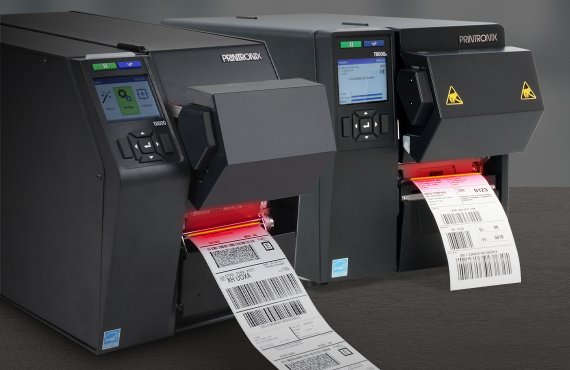
A barcode printer is a device that creates barcode labels or tags. These labels typically contain product information, such as price, SKU, or serial number, in machine-readable form. Barcode printers are commonly used in retail, shipping, and inventory management systems to track and organize products and assets.
Unlike standard printers, barcode printers use thermal printing technology to print on adhesive labels, which can then be affixed to products or packaging. The printed barcodes can be read by barcode scanners, which quickly capture product details, improving efficiency and accuracy across various workflows.
Types of Barcode Printers
There are several types of barcode printers, each designed to meet different needs. The main types are:
Thermal Transfer Printers
Thermal transfer printers use a heated ribbon to transfer ink onto the label, resulting in a durable print. This type of printer is ideal for creating long-lasting labels that will not fade over time. Thermal transfer barcode printers are commonly used in applications that require labels to withstand harsh conditions, such as warehouses, shipping, or outdoor use.
Direct Thermal Printers
Direct thermal printers, on the other hand, do not require ribbons. Instead, they use heat-sensitive paper that turns black when heated. While this makes them cheaper to operate, the labels they produce may degrade over time, especially if exposed to heat or sunlight. Direct thermal barcode printers are typically used for short-term applications, such as shipping labels or price tags.
Inkjet and Laser Barcode Printers
Inkjet and laser printers can also print barcodes, but they are less common than thermal printers. Inkjet printers use liquid ink to print on labels, while laser printers use a laser beam to etch images onto paper. While both types can produce high-quality barcodes, they are typically slower and less cost-effective for high-volume printing. These printers are better suited to environments where barcode printing is not the primary function.
Key Features to Consider When Choosing a Barcode Printer
When selecting a barcode printer for your business, several important features should be considered. These features can affect the printer’s performance, durability, and ease of use.
Print Resolution
The print resolution refers to the sharpness and clarity of the printed barcode. A higher resolution (measured in dots per inch, or DPI) results in more detailed, readable barcodes. For most applications, a resolution of 203 DPI is sufficient, but for small barcodes or highly detailed prints, a 300 DPI or higher printer may be necessary.
Print Speed
Print speed is another crucial factor, especially for businesses that require high-volume barcode printing. The faster the print speed, the quicker your team can get products labeled and ready for sale or shipment. Print speeds are typically measured in inches per second (IPS), and most barcode printers offer speeds ranging from 4 to 10 IPS.
Connectivity Options
Barcode printers offer various connectivity options, including USB, Ethernet, and wireless. Depending on your setup, you may need a printer that can easily connect to your existing system, whether it’s a computer, mobile device, or cloud-based platform. Ensure the barcode printer you choose supports the connectivity options that best suit your business operations.
Durability
If you plan to use your barcode printer in a warehouse or high-traffic environment, durability is an important consideration. Some barcode printers are built with rugged enclosures to withstand rough conditions, dust, and moisture. These models are ideal for industrial applications where the printer may be exposed to challenging environments.
For more related information, thermal paper rolls
Benefits of Using a Barcode Printer
Using a barcode printer in your business can provide several key benefits, including improved efficiency, reduced errors, and enhanced customer experience.
Increased Efficiency
Barcode printers streamline the labeling process, allowing you to print barcodes for products and shipments quickly. This eliminates the need for manual data entry, reducing time spent on labeling and increasing overall productivity. When combined with barcode scanners, inventory management and order fulfillment become faster and more accurate.
Improved Accuracy
Manual data entry is prone to human error, leading to mistakes and costly issues such as incorrect orders or inventory discrepancies. Barcode printers eliminate this risk by automating labeling, ensuring each product is tagged with the correct information. Barcode scanners can easily read these labels, reducing the chances of errors when handling inventory.
Cost Savings
Although barcode printers require an initial investment, they can help businesses save money in the long run. By automating labeling and tracking, barcode printers reduce labor costs and minimize mistakes that can lead to financial losses. The efficiency gains provided by a barcode printer can help your business run more smoothly and profitably.
Conclusion
A barcode printer is a powerful tool for businesses looking to improve their inventory management, order fulfillment, and overall operational efficiency. By choosing the right barcode printer for your needs and considering key features such as print resolution, speed, and connectivity, you can ensure your business runs smoothly and cost-effectively. Whether you’re in retail, logistics, or any other industry that requires labeling, a barcode printer can significantly streamline your processes and improve accuracy.
Investing in a barcode printer is an investment in your business’s future, helping you stay ahead in today’s fast-paced marketplace.
For more information, visit by here
 evyenmia
  miskaelias
  letishya