
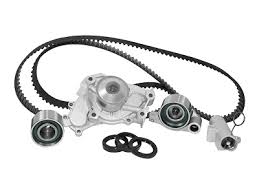
In the world of internal combustion engines, precision is not just a goal—it is a requirement. The timing belt serves as the literal heartbeat of the engine, ensuring that the crankshaft and camshaft rotate in perfect harmony. At NMR Bearing, we understand that a timing belt kit is more than just a replacement part; it is a critical system designed to prevent engine interference and total mechanical breakdown.
Understanding the Role of the Timing Belt Kit
A timing belt’s primary job is to synchronize the opening and closing of engine valves with the movement of the pistons. If the timing is off by even a fraction of a second, the valves and pistons can collide, leading to bent valves, damaged cylinder heads, or a completely seized engine.
While many focus solely on the belt, industry experts know that the “kit” is where the real value lies. A comprehensive kit includes the tensioners, idler pulleys, and sometimes the water pump. These components work as a unified system. Replacing the belt without replacing a worn tensioner is a common mistake that often leads to premature system failure.
Why System Failure Occurs: A Technical Perspective
From an engineering standpoint, timing belt kits do not usually fail without warning. However, the signs can be subtle. Professional buyers should look for these key indicators of wear during routine inspections:
- Material Degradation: High engine temperatures over thousands of miles cause the rubber compounds to harden and crack.
- Bearing Fatigue: The idler pulleys and tensioners contain internal bearings. If these bearings lose lubrication or develop flat spots, they create friction that can snap a perfectly good belt.
- Tension Loss: A hydraulic or mechanical tensioner that has lost its spring rate will allow the belt to “whip,” leading to tooth jump and timing misalignment.
By sourcing kits from NMR Bearing, you ensure that every component—from the synthetic EPDM belt material to the high-grade steel in the pulleys—is manufactured to withstand these extreme stresses.
The Advantage of Full Kit Replacement
When a vehicle enters the shop for a timing belt service, the labor cost often outweighs the part cost. This is why “kit-based” maintenance is the industry standard. Replacing the belt but leaving an old water pump or tensioner in place creates a “weak link” in the engine. If the old water pump leaks six months later, the entire assembly must be disassembled again, doubling the labor costs and risking the integrity of the new belt.
NMR Bearing kits are designed to eliminate this risk. We provide a synchronized solution where every part is rated for the same service life, ensuring that once the kit is installed, the engine is protected for the next full service interval.
Technical Specifications and Material Quality
What separates a standard kit from a professional-grade kit? It comes down to the metallurgy and polymer science.
- High-Tensile Cords: Our belts utilize glass fiber tensile members to prevent stretching, maintaining precise timing even under high-torque loads.
- Advanced Elastomers: We use heat-resistant rubber compounds that remain flexible at sub-zero temperatures and stable at high engine heat.
- Precision Bearings: The pulleys in our kits feature specialized lubricants designed to last the entire lifecycle of the belt without drying out.
How to Choose the Right Kit for Your Fleet
For those managing large fleets or industrial automotive inventories, selection criteria should focus on “application-specific” engineering. Not all belts are created equal. A heavy-duty van requires different tooth profiles and tensioning strengths than a compact passenger car.
At nmrbearing.com, we prioritize data accuracy. Ensuring the kit matches the specific engine code of the vehicle is the first step in successful maintenance. A slight mismatch in tooth pitch can lead to rapid wear and “whirring” noises that signal imminent failure.
Installation Best Practices for Long-Term Reliability
Even the best timing belt kit can fail if installed incorrectly. Professionals should always adhere to the following:
- Never Kink the Belt: Internal fiber cords are fragile. Bending a belt sharply can create invisible fractures.
- Align the Marks: Always use the manufacturer’s timing marks on the crankshaft and camshaft.
- Rotate Manually: Before starting the engine, rotate the crankshaft by hand for two full cycles to ensure there is no mechanical interference.
Conclusion
Investing in a high-quality timing belt kit is the most cost-effective way to ensure engine reliability and avoid the extreme costs of a rebuild. Whether you are a technician performing a complex repair or a buyer sourcing parts for a global supply chain, the quality of the components defines the success of the job.
NMR Bearing is committed to providing the technical excellence required for modern engine demands. By focusing on the entire system—belts, tensioners, and pulleys—we provide the peace of mind that comes with knowing your engine’s “heartbeat” is in perfect sync.
For more technical data and to browse our full range of engine solutions, visit nmrbearing.com. Let us help you keep your machinery moving with precision and power.
 jarrahfraser
  lightsless
  carelsbuttler