
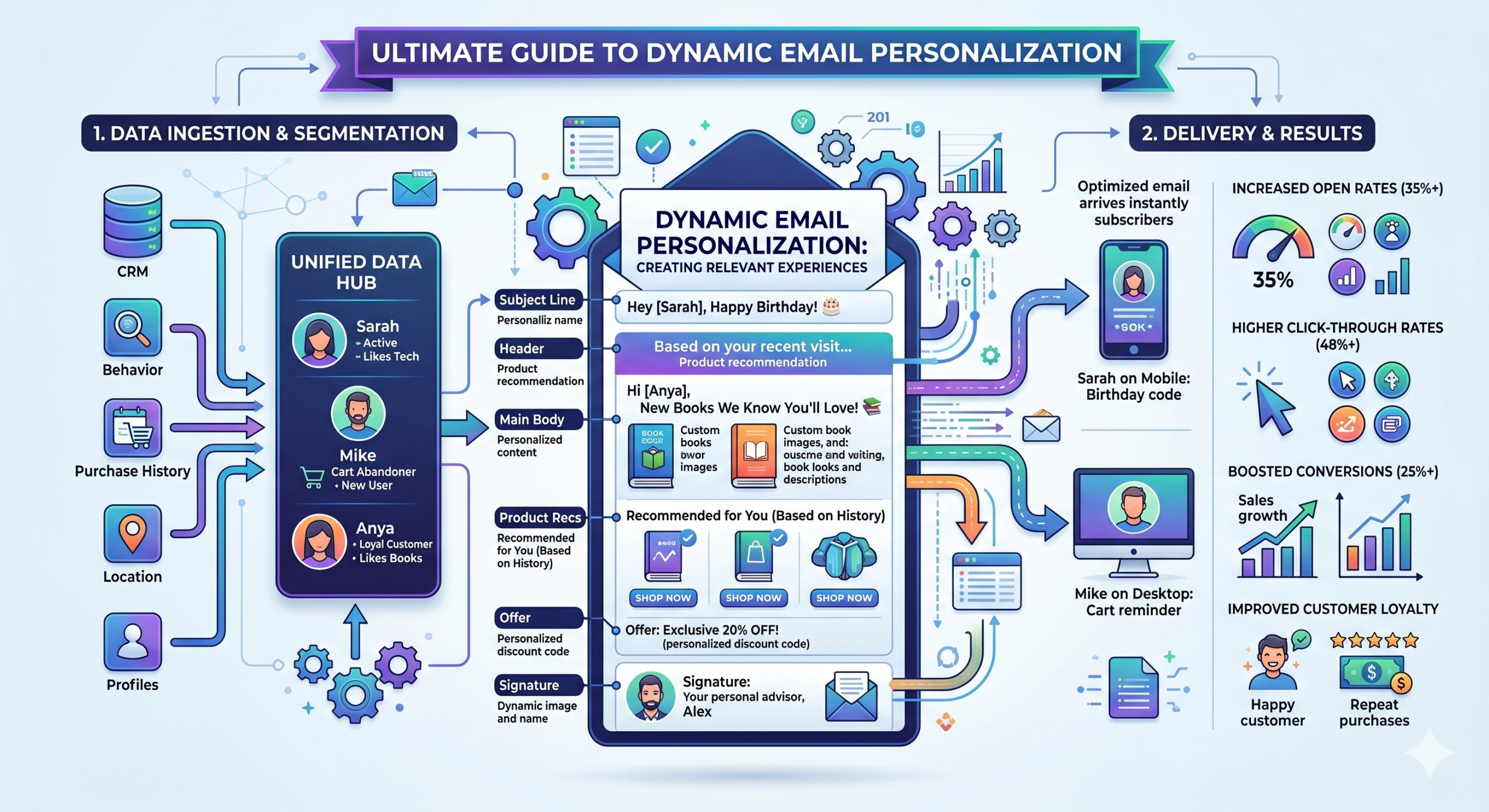
Email marketing has remained one of the most effective channels for customer engagement, but its success today depends heavily on relevance. With inboxes becoming increasingly crowded, users are quick to ignore messages that do not align with their needs or interests.
This shift in behavior has made dynamic email personalization a critical capability for modern marketers. Instead of sending static campaigns to broad audiences, businesses now need to deliver context-aware messaging that adapts in real time. The ability to respond instantly to user behavior is what separates high-performing email programs from the rest.
What is Dynamic Email Personalization?
Dynamic email personalization is the process of tailoring email content for each recipient based on their behavior, preferences, and real-time context. Unlike traditional personalization, which may include only basic elements such as a name or location, dynamic personalization adapts multiple components of the email.
These include:
- Product recommendations
- Content blocks and messaging
- Images and banners
- Offers and discounts
- Timing of delivery
The key difference is that dynamic personalization is driven by live data, ensuring that the content reflects the user’s most recent interactions.
Why Static Email Campaigns No Longer Work
Traditional email campaigns rely on segmentation and batch processing. While segmentation helps group users based on shared characteristics, it does not capture the nuances of individual behavior.
For example, two users in the same segment may have very different intent. One may be actively browsing products, while the other may have lost interest. Sending the same email to both users reduces effectiveness.
Static campaigns often lead to:
- Irrelevant messaging
- Lower open and click rates
- Missed conversion opportunities
- Increased unsubscribe rates
Dynamic email personalization addresses these limitations by making emails more responsive and individualized.
The Role of Real-Time Context
Context is what makes personalization meaningful. It ensures that emails are aligned with what the user is doing at a specific moment.
Key contextual signals include:
- Recent browsing activity
- Cart additions or abandonment
- Location and device
- Time of interaction
- Engagement history
For instance, a user who has just viewed a product category is more likely to engage with an email featuring similar products. Delivering that message in real time increases the chances of conversion.
How Dynamic Email Personalization Works
Dynamic email personalization is powered by a combination of data, automation, and intelligent decision-making.
Data Collection
The process begins with collecting data from multiple touchpoints such as websites, mobile apps, and previous email interactions. This data provides insights into user behavior and preferences.
Real-Time Processing
Data is processed instantly to capture the latest user actions. This allows businesses to respond without delay.
Content Personalization
Emails are built using modular templates that can adapt content dynamically. Each user sees a different version of the same email based on their data.
Trigger-Based Execution
Emails are triggered by specific actions, such as browsing a product or abandoning a cart. This ensures that messages are timely and relevant.
Key Use Cases
Cart Abandonment Emails
One of the most effective use cases is reminding users about items left in their cart. These emails can include personalized recommendations and incentives to encourage completion of the purchase.
Browse Abandonment
Users who view products but do not add them to the cart can be targeted with emails showcasing similar items.
Personalized Product Recommendations
Emails can feature products based on browsing history, purchase behavior, or user preferences.
Re-Engagement Campaigns
Inactive users can be re-engaged with content tailored to their past interactions.
Post-Purchase Communication
Follow-up emails can include complementary products or useful content based on the purchase.
Benefits of Dynamic Email Personalization
Higher Engagement
Emails that reflect real-time behavior are more relevant, leading to higher open and click rates.
Increased Conversions
Timely and personalized messaging influences purchasing decisions more effectively.
Improved Customer Experience
Users receive communication that feels tailored to their needs, improving satisfaction.
Better Retention
Consistent relevance helps build stronger relationships and encourages repeat engagement.
Efficient Marketing Operations
Automation reduces manual effort while improving campaign performance.
Common Challenges
Data Fragmentation
When data is spread across multiple systems, it becomes difficult to create a unified view of the customer.
Lack of Real-Time Capabilities
Without real-time processing, personalization efforts become outdated and less effective.
Complexity of Implementation
Building dynamic workflows and integrating systems requires technical expertise.
Over-Personalization
Excessive personalization can feel intrusive and may negatively impact user trust.
Best Practices for Success
Focus on High-Intent Triggers
Identify key actions such as cart abandonment or product views and build campaigns around them.
Use Modular Templates
Flexible templates allow content to be updated dynamically for each user.
Prioritize Data Accuracy
Ensure that data is clean and up to date to avoid irrelevant messaging.
Optimize Send Timing
Use behavioral data to determine when users are most likely to engage.
Continuously Test and Improve
Regular testing helps refine strategies and improve performance over time.
The Role of AI in Dynamic Email Personalization
Artificial intelligence enhances dynamic email personalization by analyzing large datasets and identifying patterns. It enables:
- Predictive recommendations
- Send-time optimization
- Automated decision-making
- Continuous learning and improvement
AI allows businesses to move beyond reactive campaigns and deliver proactive, highly relevant experiences.
The Future of Email Personalization
Email personalization is becoming more advanced with the integration of real-time data and AI. Future developments include:
- Predictive personalization based on user intent
- Interactive email content
- Deeper integration across channels
- More automated and intelligent workflows
These advancements will make email marketing more responsive and effective.
Conclusion
Dynamic email personalization is transforming how businesses engage with customers. By leveraging real-time data and context, brands can deliver messaging that is timely, relevant, and impactful.
In a competitive digital environment, static campaigns are no longer enough. Businesses that invest in dynamic personalization will be better positioned to capture attention, drive conversions, and build lasting customer relationships.
 Lavishcars