
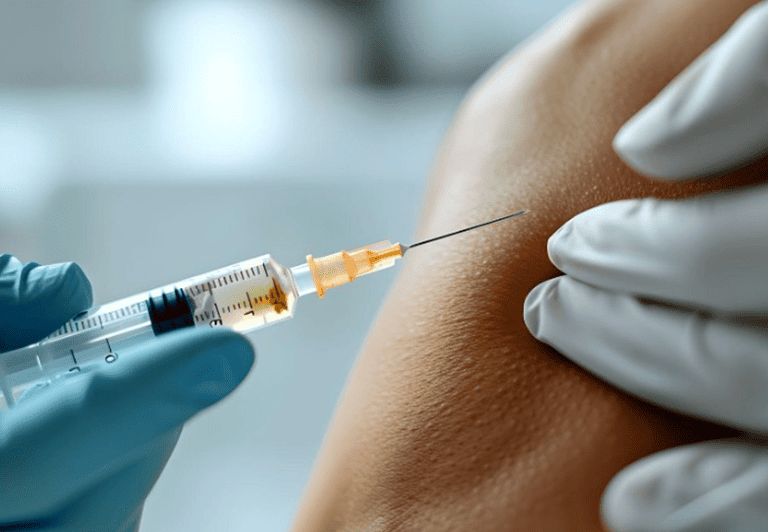
Knee stiffness is a common and often debilitating concern that limits daily mobility, making simple actions like bending, walking, or climbing stairs a daily challenge. When exploring advanced, minimally invasive options to restore joint fluid balance and enhance flexibility, many individuals consider modern orthobiologic approaches. Evaluating treatments such as PRP injections for knees in Abu Dhabi offers valuable insight into how concentrated biological components work within a compromised joint environment to target localized mechanical and structural limitations.
- The Scope of Joint Stiffness: Joint stiffness typically arises from altered fluid dynamics, cartilage wear, or localized inflammatory loops that restrict the natural gliding mechanism of the knee.
- The Role of Regenerative Options: Rather than simply masking discomfort temporarily, modern autologous solutions work with the body’s natural physiology to address the biological underpinnings of restricted joint movement.
- A Focused Approach: By utilizing highly concentrated cellular components derived directly from the patient, these applications attempt to modulate the internal ecosystem of the joint to foster long-term functional recovery.
How Autologous Platelet Components Interact with Joint Tissues
To understand how biological treatments impact joint restrictions, it is essential to explore the cellular mechanisms at play. Platelets contain dynamic storage units known as alpha-granules, which house a dense network of bioactive proteins, signaling molecules, and primary cellular messengers. When introduced into a compromised intra-articular environment, these elements are released, immediately initiating a cascade of events designed to stabilize cell-to-cell communication.
- Cellular Signaling Activation: Concentrated platelets release primary proteins like Platelet-Derived Growth Factor (PDGF) and Transforming Growth Factor-Beta (TGF-$\beta$), which serve as homing signals for localized repair cells.
- Slowing Degenerative Cycles: The biological proteins actively interfere with cartilage-degrading enzymes, helping to preserve the integrity of the remaining extracellular matrix.
- Environmental Balance: By shifting the molecular profile of the joint space, the introduction of dense platelet matrices encourages an environment favoring structural stability over chronic breakdown.
The Biological Connection Between Platelet Activity and Stiffness Relief
Joint stiffness is heavily influenced by changes in the synovial fluid—the natural lubricant that allows the knee components to move smoothly against one another. In a compromised knee, this fluid loses its ideal viscosity, and the surrounding joint capsule can become thick and unyielding. Autologous platelet therapy targets this localized distress by introducing a high volume of modulating factors directly where the friction occurs.
- Synovial Fluid Modulation: The biological components interact directly with synoviocytes (the cells responsible for fluid production), encouraging a return to healthy, lubricating homeostatic levels.
- Supporting Extracellular Health: Signaling molecules like Insulin-like Growth Factor (IGF-1) assist in preserving cell viability within the joint, ensuring the internal framework remains resilient under mechanical stress.
- Improving Range of Motion: As the internal friction decreases and fluid dynamics stabilize, the mechanical resistance within the joint capsule diminishes, allowing for smoother flexion and extension.
What to Expect During the Preparation and Application Process
The application of autologous biological therapy follows a precise, structured sequence that relies entirely on utilizing the patient’s own cellular resources. Because the medium is derived from the individual’s own blood, the process is highly customized, ensuring complete biological compatibility without the introduction of synthetic additives or foreign compounds.
- The Initial Processing Stage: A small volume of blood is drawn and placed into a specialized centrifuge, which rotates at precise speeds to separate the distinct cellular layers based on density.
- Isolating the Concentrated Layer: The processing isolates a specific fraction of plasma where the platelet concentration is significantly higher than baseline levels, creating the therapeutic medium.
- Direct Joint Delivery: The concentrated autologous matrix is meticulously introduced into the intra-articular space of the knee joint, ensuring the targeted delivery of active signaling proteins exactly where structural restrictions exist.
Factors Influencing the Longevity and Efficacy of the Response
The success of utilizing concentrated biological proteins to address stiffness and mechanical limitations depends on several specific patient and processing variables. Clinical observations highlight that the quality, concentration, and timing of the application play crucial roles in determining how long the functional improvements persist.
- The Quality of the Concentration: Research indicates that formulas containing higher platelet counts (often exceeding baseline concentrations significantly) deliver a more durable functional response.
- The Stage of Joint Preservation: Individuals experiencing early to moderate mechanical limitations generally achieve more pronounced improvements in flexibility compared to advanced, bone-on-bone scenarios.
- Post-Application Care: Following structured movement protocols and avoiding undue mechanical strain immediately after the process helps the introduced biological factors integrate effectively into the tissue space.
Frequently Asked Questions
Does this method help with morning stiffness specifically?
Yes, by modulating the intra-articular fluid dynamics and improving the quality of the synovial fluid, these concentrated biological applications help reduce the structural friction and resistance that typically accumulate during prolonged periods of rest or overnight inactivity.
How soon can improvements in knee flexibility be noticed?
While initial cellular stabilization begins shortly after delivery, noticeable improvements in joint range of motion and flexibility typically develop gradually over three to six weeks as the biological signaling pathways actively balance the internal joint environment.
Is this structural approach a permanent cure for knee wear?
While biological therapies provide significant long-term functional relief and can maintain improved joint mobility for six to twelve months or longer, they are designed to manage and slow down the impacts of joint wear rather than completely reversing advanced structural changes.
Can both knees be managed during the same session?
Yes, because the solution is prepared from the patient’s own autologous blood, a sufficient volume can be processed simultaneously to address mechanical stiffness and fluid limitations in both joint spaces during a single scheduled session.
 everestar
  tapeda3064
  slbinhomecare