
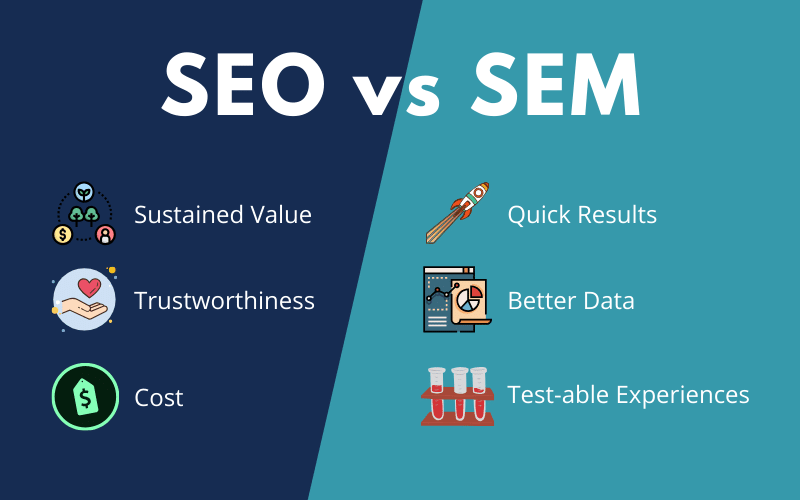
If you want more people to find your website on Google, you need a strong digital marketing strategy. Two of the most popular methods are SEO and SEM. Many beginners get confused between these two terms because both help websites appear in search engine results.
The truth is simple. SEO and SEM both increase website traffic, but they work in different ways. One focuses on free traffic. The other uses paid ads for fast results.
Understanding the difference helps you choose the right strategy for your business, blog, online store, or service website. This guide explains everything in simple words so anyone can understand it easily.
What Is SEO?
SEO stands for Search Engine Optimization. It is the process of improving your website so it can rank higher in Google search results without paying for ads.
SEO helps search engines understand your content. When your website is properly optimized, Google shows it to users searching for related topics.
For example, if someone searches for “best shoes for running,” Google tries to show the most useful and trusted pages.
SEO includes many activities such as:
- Writing quality content
- Using keywords naturally
- Improving website speed
- Making websites mobile-friendly
- Building backlinks
- Optimizing titles and images
SEO takes time, but the results can last for months or even years.
What Is SEM?
SEM stands for Search Engine Marketing. It is a digital marketing method that uses paid advertising to appear in search engine results.
With SEM, businesses pay Google to show their ads when users search for certain keywords.
These ads usually appear at the top of the search results page with a small “Sponsored” label.
SEM mainly works through platforms like:
- Google Ads
- Bing Ads
- YouTube Ads
Businesses bid on keywords and pay whenever someone clicks their ad. This method is called Pay-Per-Click or PPC advertising.
SEM gives fast visibility and instant traffic.
Main Difference Between SEO and SEM
The biggest difference is simple.
SEO focuses on organic traffic.
SEM focuses on paid traffic.
SEO helps websites rank naturally over time. SEM places paid ads at the top instantly.
Here is an easy comparison:
| Feature | SEO | SEM |
| Traffic Type | Organic | Paid |
| Cost | Free clicks | Paid clicks |
| Results Speed | Slow | Fast |
| Long-Term Value | High | Stops when budget ends |
| Trust Level | Higher | Moderate |
| Maintenance | Continuous optimization | Continuous ad spending |
Both methods are useful, depending on your goals and budget.
How SEO Works
Search engines use bots to scan websites and understand content. Google then ranks pages based on quality, relevance, and user experience.
SEO works through three main areas.
1. On-Page SEO
This includes optimization inside your website.
Examples include:
- Optimized titles
- Meta descriptions
- Proper headings
- Internal linking
- Image optimization
- Keyword placement
Good on-page SEO makes content easier to understand for both users and search engines.
2. Off-Page SEO
This focuses on building authority outside your website.
The most important factor is backlinks. When trusted websites link to your content, Google sees your website as valuable.
Off-page SEO also includes:
- Guest posting
- Brand mentions
- Social sharing
- Influencer outreach
3. Technical SEO
Technical SEO improves website performance and structure.
This includes:
- Fast loading speed
- Mobile responsiveness
- HTTPS security
- XML sitemaps
- Fixing broken links
Technical improvements help search engines crawl your website more efficiently.
How SEM Works
SEM works through paid advertising campaigns.
Businesses choose keywords related to their products or services. Then they create ads targeting those keywords.
When users search those terms, Google may display the ads.
Advertisers only pay when someone clicks.
This process includes:
- Keyword research
- Writing ad copy
- Setting budgets
- Targeting audiences
- Tracking conversions
SEM campaigns can generate traffic within hours.
Benefits of SEO
SEO offers many long-term advantages.
Free Organic Traffic
Once your content ranks well, you can get traffic without paying for every visitor.
Better Trust
Users often trust organic results more than paid ads.
Long-Term Growth
Strong SEO can continue bringing traffic for years.
Higher ROI
Although SEO takes time, it often provides better returns over the long term.
Improved User Experience
SEO encourages better website speed, navigation, and mobile usability.
Benefits of SEM
SEM is useful for businesses needing quick results.
Instant Visibility
Ads can appear on Google immediately after campaign approval.
Fast Traffic
SEM drives visitors quickly, especially for new websites.
Better Targeting
You can target users by:
- Location
- Device
- Language
- Interests
- Search behavior
Easy Testing
Businesses can test keywords, headlines, and landing pages quickly.
Great for Promotions
SEM works well for seasonal sales, product launches, and limited-time offers.
SEO vs Paid Ads: Which One Costs More?
SEO usually requires time, tools, and content creation. You may also hire experts or agencies.
SEM requires direct advertising spend. Competitive keywords can become expensive.
For example:
- A local keyword may cost less than $1 per click
- Competitive business keywords can cost over $20 per click
SEO costs are often lower in the long run because organic traffic does not charge per click.
Which Strategy Is Better for Small Businesses?
Small businesses usually benefit from both methods.
SEO is great for long-term growth and brand authority.
SEM is useful for:
- Quick leads
- Local promotions
- Product launches
- New websites
Many businesses start with SEM for immediate traffic while building SEO for future growth.
This combination often gives the best results.
When Should You Choose SEO?
SEO is a better option when:
- You want long-term traffic
- You have a limited ad budget
- You want to build authority
- You publish regular content
- You want sustainable growth
Blogs, service businesses, and informational websites often depend heavily on SEO.
When Should You Choose SEM?
SEM is useful when:
- You need fast traffic
- Your website is new
- You run seasonal campaigns
- You sell competitive products
- You want quick testing
Ecommerce stores often use SEM for product sales and promotions.
Common SEO Mistakes
Many beginners make simple mistakes that hurt rankings.
Avoid these problems:
- Keyword stuffing
- Slow website speed
- Duplicate content
- Poor mobile design
- Buying spam backlinks
- Ignoring user experience
Google rewards helpful and high-quality content.
Common SEM Mistakes
SEM campaigns can waste money if managed poorly.
Common mistakes include:
- Targeting wrong keywords
- Weak landing pages
- Poor ad copy
- No conversion tracking
- Ignoring negative keywords
Successful SEM campaigns need regular optimization.
Can SEO and SEM Work Together?
Yes. The best digital marketing strategies often combine both.
SEO builds long-term organic traffic.
SEM provides fast visibility and leads.
Together they help businesses dominate search engine results.
For example:
- SEO blogs bring free visitors
- SEM ads drive instant conversions
- Both increase brand awareness
Many successful companies invest in both methods.
Future of Search Marketing
Search engines continue evolving every year.
Artificial intelligence, voice search, and user experience now play a major role in rankings and advertising.
Businesses focusing on helpful content and strong user experience will perform better in the future.
SEO continues growing because users trust organic search results.
SEM also remains important because paid ads deliver immediate exposure.
Both strategies will stay valuable for online businesses.
Final Thoughts
Understanding the difference between Search Engine Optimization and Search Engine Marketing helps businesses make smarter marketing decisions.
SEO is best for long-term success and organic growth.
SEM is ideal for quick traffic and instant visibility.
If your budget allows, using both together creates stronger results. SEO builds authority over time while SEM delivers fast leads and sales.
The right choice depends on your goals, timeline, and marketing budget.
 FAREYA
  emilytrump79
  Lavishcars