
Introduction
Some whiskies announce themselves loudly. Hibiki isn’t one of them. It walks into the room quietly, sets itself down, and by the time you’ve had your first sip, you already know you’re dealing with something genuinely special. Japanese Hibiki Whisky has built its reputation the old-fashioned way — through craft, patience, and a blending philosophy so precise it’s almost meditative.
Whether you’re a seasoned collector or someone who just spotted that distinctive 24-faceted bottle and got curious, this guide covers everything worth knowing about Japan’s most celebrated blended spirit.
What Makes Hibiki Different From Every Other Blended Whisky
Most people hear “blended whisky” and think compromise — a mix of mediocre components smoothed out into something drinkable. Hibiki flips that assumption completely. The difference starts with who’s doing the blending and what they have to work with.
The House of Suntory — the name behind Hibiki — operates three distilleries across Japan, each sitting in a completely different climate and terrain. Yamazaki, tucked near the hills of Kyoto, produces deeply fruity, full-bodied malt. Hakushu, high in the Japanese Alps, brings a crisp herbal freshness that keeps things light and alive. Chita, a dedicated grain distillery, lays down the smooth, seamless base that allows everything else to integrate without competing.
Each distillery isn’t just a source of spirit — it’s a distinct voice in the blend. The blender’s entire job is making sure those voices harmonize rather than fight each other. That’s literally what the name means. Hibiki (響) translates to “resonance” in Japanese — a direct reflection of the philosophy that every component should echo and amplify the others, not drown them out.
The Casks Behind the Complexity
Understanding Hibiki’s flavor profile means understanding the wood. Most whiskies work with one or two cask types. Hibiki Japanese Harmony — the core expression available at The Liquor Pros — is aged across five distinct cask types, which is genuinely unusual even among premium blends.
American white oak contributes the familiar vanilla and caramel backbone. Sherry casks layer in dried fruit and a warm amber color. And then there’s Mizunara oak — the ingredient that makes Hibiki unmistakably Japanese. Mizunara (Quercus crispula) is a rare Japanese oak that takes over two centuries to mature before it’s even suitable for barrel production. It’s expensive, difficult to work with, and imparts flavors you simply cannot replicate with any other wood: sandalwood, incense, a subtle oriental spice that lingers long after the glass is empty. The oldest whiskies in the Harmony blend are typically the Mizunara-aged components, and you can taste exactly why they’re worth the wait.
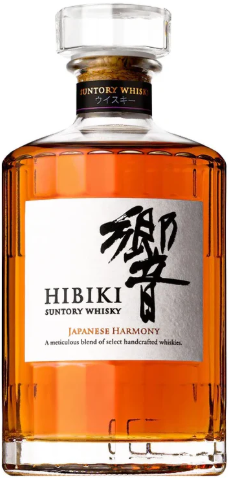
Hibiki Japanese Harmony: The Bottle You Should Start With
Hibiki Japanese Harmony is the entry point into the range and, for most people outside Japan, the expression they’re most likely to encounter. It’s a no-age-statement blend built from over 10 different malt and grain whiskies — a construction that gives the blending team flexibility while still delivering genuine complexity in every bottle.
The tasting notes tell the whole story here. On the nose: rose, lychee, green apple, sandalwood, and honey — a layered, floral opening that’s distinctly Japanese in character. The palate delivers smooth creaminess with candied orange, white chocolate, caramel, and a subtle warmth from spice. The finish is long and tender, leaving hints of oak, white grape, and gentle warmth that keep you reaching for another sip.
It’s presented in Suntory’s iconic 24-faceted bottle — each facet representing one of the 24 seasons in Japan’s traditional calendar. It’s not just beautiful packaging. It’s a statement about how seriously the brand takes the relationship between whisky and the natural world it comes from. Whether you’re gifting it or keeping it for yourself, the bottle alone makes an impression before anyone’s opened it.
At $99.99 from The Liquor Pros, it’s genuinely accessible for the quality level inside — especially compared to the aged expressions, which command significantly higher prices.
How to Actually Drink It
Hibiki Harmony is versatile in a way that not every premium whisky is. It holds up equally well across several serving styles, and none of them feel like a waste.
Neat or with a splash of water is the purist’s choice — it opens up the floral aromatics and lets the Mizunara character come through properly. Give it a minute in the glass before you drink. You’ll notice it evolves.
On the rocks is a clean, refined option that slows the sip and slightly mutes the intensity. Good for warmer evenings or when you want something a little more leisurely.
Highball is how much of Japan actually drinks whisky — chilled sparkling water over ice with a long pour of Hibiki and a twist of citrus if you like. It sounds simple, but it genuinely elevates the whisky’s lighter, floral notes in a way that’s almost counterintuitive until you try it.
Old Fashioned works beautifully too. The whisky’s inherent sweetness and oak character translate well with a sugar cube, a few dashes of Angostura, and an orange peel.
The Full Hibiki Range: A Quick Overview
Harmony is just where the story starts. The Hibiki lineup has included several expressions over the years, though availability has tightened considerably due to global demand.
The Hibiki 17 Year was the original release — launched in 1989 alongside Suntory’s 90th anniversary — and was named Best Japanese Blended Whisky at the World Whiskies Awards. It was discontinued in 2018 due to aged stock limitations and now trades on the secondary market for well over $800 a bottle.
The Hibiki 21 Year is the crown jewel of what’s still in production. It has won the title of World’s Best Blended Whisky multiple times and was named Supreme Champion Spirit at the International Spirits Challenge in 2017. Its nose is deep with cooked fruits, caramel, and dark chocolate, with that signature sandalwood note. Expect to pay $1,000 or more if you can find it.
The Hibiki 30 Year is effectively collector territory — a legendary bottle that won World’s Best Blended Whisky in both 2007 and 2008 and now retails in the $9,000–$11,000 range. If you ever get to try it, you’ll understand why.
How Hibiki Compares to Other Japanese Whiskies
Japan’s whisky scene has exploded over the last decade, and there’s no shortage of excellent options now — from Nikka’s Coffey Malt and Yoichi expressions to Ohishi’s interesting cask experiments and newer craft entries. But Hibiki occupies a specific position at the top of the blended category that’s hard to challenge.
Where single malts like Yamazaki or Hakushu let one distillery’s character shine, Hibiki deliberately synthesizes all three Suntory distilleries into something that couldn’t have come from any single source. It’s a different kind of achievement — not louder or more intense, just more complete. “Kanzen” is the Japanese word Suntory uses for it. It means complete, whole, finished. That’s Hibiki in a word.
Frequently Asked Questions
What does Hibiki mean in Japanese?
Hibiki (響) means “resonance” — a reflection of how multiple whisky components are blended to resonate together in harmony rather than compete.
Is Hibiki Japanese Harmony a good whisky for beginners?
Yes, absolutely. It’s approachable, genuinely complex for its price point, and balanced enough that it’s not intimidating. It’s one of the best introductions to Japanese whisky available.
Why has Hibiki become so expensive and hard to find?
Global demand for Japanese whisky surged while aged whisky stocks take 10–30 years to replenish. The older expressions in particular — the 17, 21, and 30 Year — simply can’t be produced fast enough to meet demand.
Is Hibiki 17 Year still being made?
No. Suntory suspended production in 2018 due to a shortage of aged spirits. Bottles found today come from existing reserves and carry a significant premium.
Where can I buy Hibiki Harmony in the USA?
You can order Suntory Hibiki Harmony 750ml directly through The Liquor Pros with fast nationwide shipping from their USA warehouse.
Conclusion
Hibiki isn’t a whisky that tries to impress you. It just does. Every decision behind it — the three distilleries, the five cask types, the rare Mizunara oak, the 24-faceted bottle — reflects a culture that treats craftsmanship as something you do properly or not at all.
If you’ve been on the fence about exploring Japanese whisky, this is the bottle that makes the case better than any argument could. Pour it neat, give it a moment, and let it do the talking.
 Casanova