
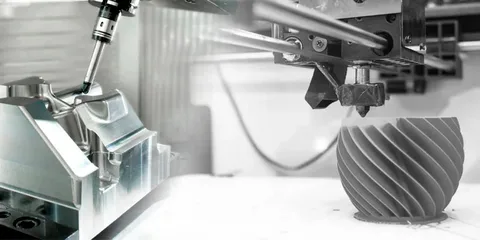
Manufacturers, engineers, and product designers often face an important decision when creating parts and prototypes: choosing between CNC machining and 3D printing. Both technologies have transformed modern manufacturing, offering unique advantages depending on project requirements. Understanding the differences between these fabrication methods is essential for achieving the right balance of cost, quality, speed, and performance.
When comparing cnc machining vs 3d printing, several factors come into play, including material selection, production volume, design complexity, and final product requirements. This guide explores the key considerations to help you select the best fabrication method for your next project.
Understanding the Fundamentals of CNC Machining and 3D Printing
CNC machining is a subtractive manufacturing process that removes material from a solid block using computer-controlled cutting tools. This method is widely used for producing precise, durable, and high-quality components across industries such as aerospace, automotive, and medical manufacturing.
In contrast, 3D printing is an additive manufacturing process that builds parts layer by layer from digital models. This technology excels at producing complex geometries and rapid prototypes without the need for extensive tooling. The debate of cnc machining vs 3d printing often begins with understanding these fundamental differences in manufacturing approaches.
Key Characteristics
- CNC machining removes material from a solid workpiece.
- 3D printing adds material layer by layer.
- CNC delivers exceptional precision and surface finish.
- 3D printing enables intricate and complex designs.
- Both methods use computer-controlled manufacturing processes.
Evaluating Design Complexity and Geometric Freedom
One of the biggest advantages of 3D printing is its ability to create highly complex geometries that would be difficult or impossible to manufacture using traditional machining methods. Internal channels, lattice structures, and organic shapes can often be produced without additional tooling or assembly.
However, CNC machining remains the preferred choice for parts requiring strict dimensional accuracy and precise tolerances. While certain complex designs may require multiple machining operations, CNC equipment can consistently produce highly accurate features that many additive manufacturing systems struggle to match.
Design Considerations
- Choose 3D printing for intricate internal structures.
- Use CNC machining for tight tolerances.
- Consider assembly requirements for complex parts.
- Evaluate whether geometry can be manufactured efficiently.
- Review design constraints early in the development process.
The decision between cnc machining vs 3d printing often depends on whether design freedom or dimensional precision is the primary project goal.
Comparing Material Options and Mechanical Performance
Material selection plays a major role when choosing a fabrication method. CNC machining supports a wide range of materials, including aluminum, stainless steel, titanium, brass, copper, engineering plastics, and composites. These materials often provide superior mechanical properties and durability.
While 3D printing materials continue to improve, some printed parts may not achieve the same strength, heat resistance, or long-term durability as machined components. However, additive manufacturing offers specialized materials and lightweight design opportunities that can be advantageous in certain applications.
Material Factors to Assess
- Mechanical strength requirements.
- Heat and chemical resistance needs.
- Material availability.
- Surface finish expectations.
- Regulatory or industry compliance standards.
For projects where structural integrity is critical, cnc machining vs 3d printing comparisons frequently favor CNC machining due to its broader material compatibility and superior material properties.
Assessing Production Speed and Cost Efficiency
Cost and production speed are among the most influential factors in manufacturing decisions. 3D printing typically offers lower setup costs because it does not require custom tooling, fixtures, or extensive machine preparation. This makes it highly attractive for prototypes, low-volume production, and design validation.
CNC machining may involve higher initial setup costs but becomes increasingly cost-effective as production volumes increase. Once programming and setup are completed, CNC machines can produce large quantities of consistent parts efficiently and repeatedly.
Cost Evaluation Checklist
- Prototype quantity requirements.
- Production volume expectations.
- Setup and tooling expenses.
- Material waste considerations.
- Lead time requirements.
When analyzing cnc machining vs 3d printing, businesses should calculate both short-term and long-term manufacturing costs rather than focusing solely on the initial project budget.
Quality, Precision, and Final Application Requirements
The intended use of the final product often determines the best manufacturing method. CNC machining is known for delivering outstanding dimensional accuracy, smooth surface finishes, and repeatable production quality. These characteristics make it ideal for functional components used in demanding environments.
3D printing, on the other hand, excels in rapid iteration and design flexibility. It allows engineers to test multiple design concepts quickly without significant investment. Although post-processing can improve surface quality, printed parts may still require additional finishing operations depending on the application.
Quality Requirements to Consider
- Required dimensional tolerances.
- Surface finish expectations.
- Load-bearing performance.
- Product lifespan requirements.
- Industry certification standards.
The choice between cnc machining vs 3d printing should ultimately align with the performance expectations of the finished part and its intended operating environment.
Making the Right Choice for Your Project
Selecting the ideal fabrication method requires balancing multiple factors rather than focusing on a single advantage. CNC machining provides unmatched precision, material versatility, and durability, making it suitable for high-performance and production-ready components.
Meanwhile, 3D printing offers exceptional design flexibility, rapid prototyping capabilities, and lower upfront costs for small production runs. Many organizations successfully combine both technologies, using 3D printing during product development and CNC machining for final production.
Decision-Making Guidelines
- Use 3D printing for prototypes and complex geometries.
- Choose CNC machining for precision and durability.
- Consider hybrid manufacturing strategies.
- Evaluate total production costs.
- Match the fabrication method to project objectives.
Conclusion
The debate over cnc machining vs 3d printing is not about determining a universal winner but identifying the most appropriate solution for a specific application. CNC machining excels in precision, material strength, and large-scale production, while 3D printing shines in design freedom, rapid prototyping, and low-volume manufacturing.
By carefully evaluating design complexity, material requirements, production volume, cost considerations, and quality expectations, manufacturers can confidently select the fabrication method that delivers the best results. Whether you prioritize performance, flexibility, or efficiency, understanding the strengths of both technologies will help ensure the success of your next manufacturing project.
 Lavishcars
  mikestallion11